
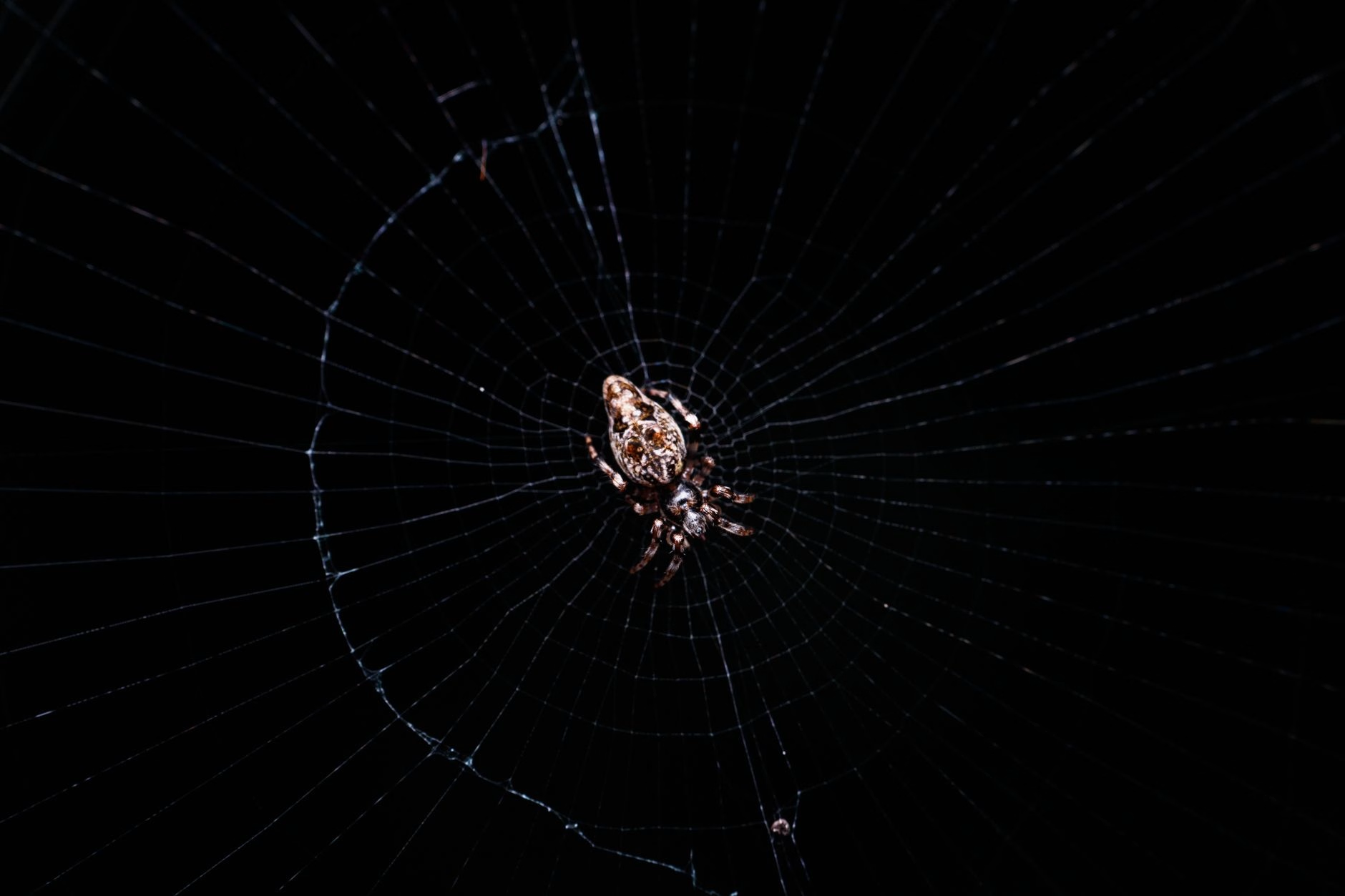
You’ve heard it at sleepovers, seen it on a poster in a college dorm, maybe even had a well-meaning aunt repeat it at dinner: the average person supposedly swallows eight spiders a year while sleeping. Cue the shudders and the sudden urge to sleep with your mouth taped shut. Here’s the good news — you almost certainly don’t swallow spiders in your sleep, and the story behind this myth is way more interesting than the myth itself.
Let’s pull back the curtain (and check it for cobwebs) on one of the most gloriously creepy pieces of body folklore ever invented.
Where Did the “Swallow Spiders in Your Sleep” Myth Come From?
The oddly specific number — eight spiders a year — is the detail that makes this myth so sticky. Real facts rarely come with such a tidy, memorable statistic, and that’s exactly the giveaway. There’s no scientific study, no entomologist’s field notes, no verified data source behind that number.
There’s a popular story that this myth was deliberately invented in the 1990s by a writer to prove a point about how easily people believe and forward unverified “facts” — especially in early chain emails and internet lists. That origin story itself has become part of internet lore, and it’s difficult to verify who exactly first wrote the claim down. What we can say with confidence is that the number has no scientific backing whatsoever, and it spread because it was creepy and quotable, not because anyone ever actually counted spiders going down people’s throats.
Why Spiders Have Zero Interest in Your Mouth
Here’s the part that should actually make you feel better: spiders are not interested in crawling into a sleeping human’s mouth. At all. From a spider’s point of view, your mouth is a terrifying, warm, moist cave that occasionally makes loud rumbling noises (also known as breathing and snoring).
Spiders rely heavily on sensing vibration in their environment as an early warning system. A sleeping human:
- Breathes rhythmically, creating constant air movement a spider can sense
- Has body warmth and movement that spiders are likely to perceive as a potential threat rather than shelter
- Often snores, shifts, or makes noise — all things that tend to make small creatures keep their distance
Even if a spider did wander onto your bed, its natural instinct would be to seek out a dark, quiet, undisturbed spot — not a noisy, moving cavern full of teeth. Spiders would much rather hide behind your headboard than anywhere near your face.
But Don’t Spiders Like Cozy, Dark Places?
Yes, spiders do love dark, quiet, undisturbed spots — which is exactly why your mouth is a terrible choice for one. A sleeping mouth isn’t undisturbed; it’s an active, moving, breathing, occasionally snoring environment. A shoe in the back of your closet, on the other hand, checks every box a spider is looking for: dark, still, and rarely bothered. That’s why “surprise spider in the shoe” is a much more realistic household story than anything involving your pillow.
Has Anyone Ever Actually Documented Swallowing a Spider While Sleeping?
There’s no credible, well-documented case of a person waking up mid-swallow with spider legs still dangling out of their mouth. Researchers and science writers who’ve looked into this myth over the years have found no real evidence to back up the eight-spiders claim — it doesn’t appear to trace back to any actual study or survey.
Could a spider theoretically end up on your bed and, in some extremely rare fluke, near your face? Sure, technically anything’s possible. But “extremely rare fluke” is a far cry from “happens to basically everyone, eight times a year, like clockwork.” The math and the biology both say: not happening.
Why This Myth Refuses to Die
Some myths survive because they’re comforting. This one survives because it’s the opposite — deliciously unsettling in a way that makes for great campfire chat. Humans love a good shiver, and “there might be a spider in your mouth right now” is peak shiver material.
It also plays into a very real, very common fear: arachnophobia. Spiders already trigger disproportionate dread compared to their actual threat level (the vast majority of spiders people encounter indoors are harmless to humans), so a myth that combines spiders with the vulnerability of sleep hits two anxiety buttons at once. That combination is basically myth rocket fuel.
So What Should You Actually Worry About at Night?
If you’re looking for a real nighttime roommate to think about instead, dust mites are a far more accurate (if less dramatic) one. Microscopic dust mites do commonly live in bedding and feed on shed skin flakes — though for most people they’re a harmless, normal part of household life rather than something to panic over. They can be a trigger for allergy or asthma symptoms in sensitive individuals.
As always, if you have specific health worries about allergies, breathing, or anything related to your sleep environment, it’s worth having a quick chat with a doctor rather than trusting a spooky statistic with no source.
Frequently Asked Questions
Is it true that you swallow 8 spiders a year in your sleep?
No. There’s no scientific evidence supporting this claim, and spider behavior actually makes it extremely unlikely. It’s considered an urban legend, not a fact.
Why do spiders avoid sleeping humans?
Spiders sense vibration and movement as signs of a large presence nearby. A breathing, snoring, shifting human is not the kind of undisturbed spot spiders look for when they hide.
Could a spider ever accidentally end up in someone’s mouth?
It’s not physically impossible, but it would be an extremely rare accident rather than a regular occurrence. There’s no reliable data suggesting it happens to most people, let alone multiple times a year.
Where do spiders actually like to hide indoors?
Dark, quiet, undisturbed spots like closets, shoes, garages, and corners of rooms are far more appealing to spiders than an active human mouth.
So next time someone tries to freak you out with the “eight spiders a year” line, you can smile, sip your tea, and set the record straight. Got a favorite body myth you’ve always wondered about? Drop it in the comments — we might just bust it next.
Featured image: Photo by cassius cardoso on Pexels