
Key Takeaways
- Goosebumps happen when the arrector pili muscle at the base of each hair follicle contracts, a reflex run by the sympathetic nervous system.
- The same reflex that once helped fur-covered ancestors trap heat or look bigger now also fires during music, fear, and nostalgia, a reaction scientists call frisson.
- Not everyone feels frisson from music, and that variation is normal rather than a sign of stronger or weaker emotions.
- Other mammals, from cats to porcupines, still use the same arrector pili reflex to look bigger or trap heat.
- Goosebumps are a well-preserved evolutionary leftover, not a mysterious glitch, even though modern humans no longer have the fur to make them useful.
You’re washing dishes, half-listening to a song, when suddenly a single note hits and a wave of tingles rolls down your arms. It’s not cold in the kitchen. Nobody jumped out and scared you. So why did your skin just react like it was?
Goosebumps happen when tiny muscles under your skin called arrector pili contract, pulling body hair upright and puckering the skin around each follicle. This reflex evolved to trap heat or make our hairy ancestors look bigger when threatened, but the same nerve pathway also fires during powerful emotional moments like music, fear, or nostalgia. That emotional version even has its own name: frisson.
What’s Actually Happening Under Your Skin?
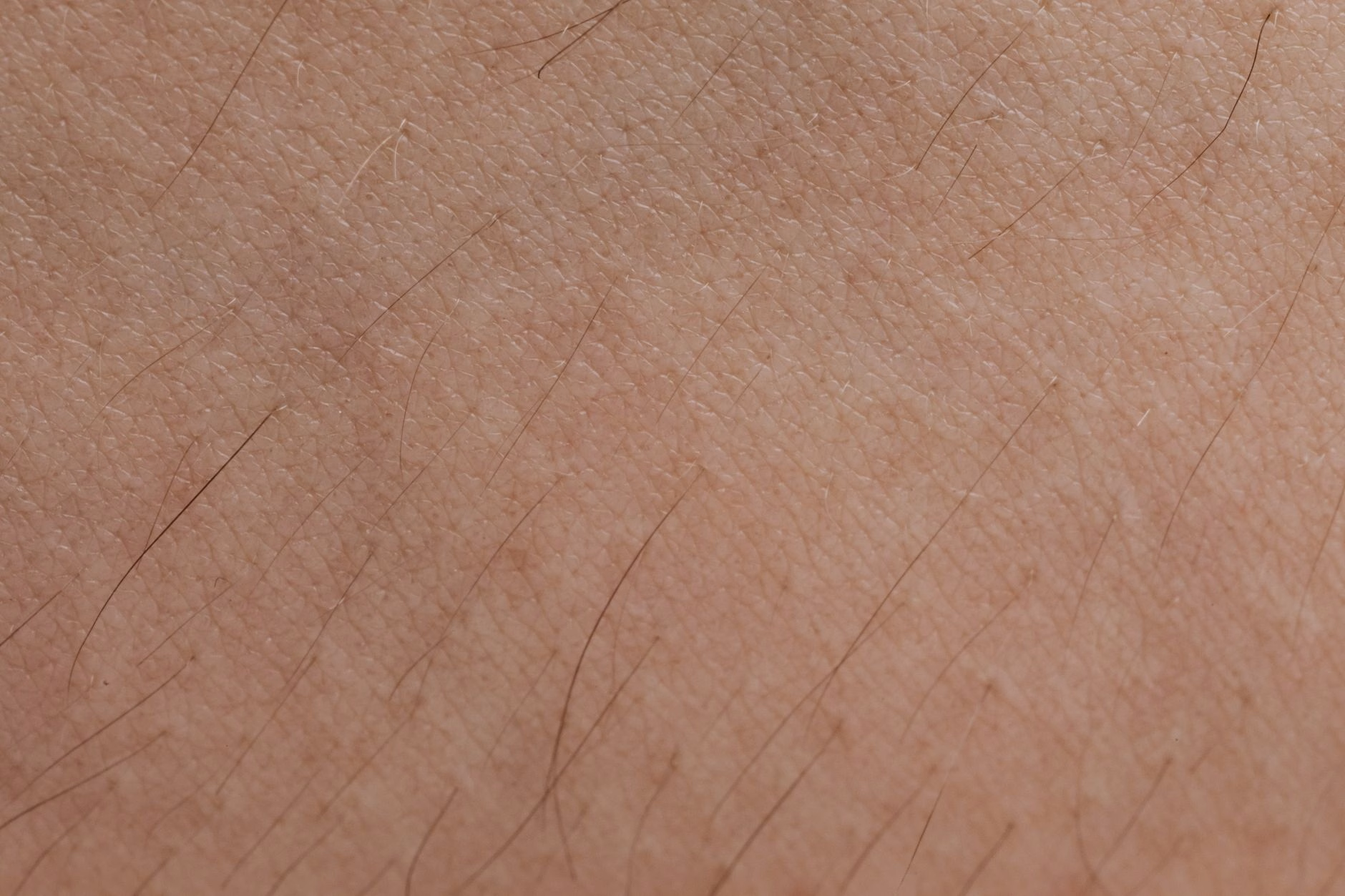
Goosebumps form when the arrector pili muscle, a tiny band of smooth muscle attached to each hair follicle, contracts and pulls the hair upright. This isn’t something you control on purpose. It’s run by your sympathetic nervous system, the same “fight or flight” network that speeds up your heartbeat when you’re startled.
Each hair follicle on your body has its own arrector pili muscle. When the sympathetic nervous system releases adrenaline, also called epinephrine, it doesn’t just affect your heart and lungs. It also reaches these microscopic muscles and tells them to squeeze, producing that familiar bumpy texture known scientifically as piloerection in humans.
Cold is the most obvious trigger because raised hair traps a thin layer of warm air near the skin, an insulation trick that worked well when human ancestors were covered in thick body hair. Most of that fur is gone now, so the reflex still fires, it just doesn’t do much heating anymore. It’s a bit like a car’s turn signal still clicking after the bulb has burned out.
Why Does Music Give Some People Chills But Not Others?
Music can trigger goosebumps when a song does something the brain doesn’t expect, such as a sudden key change, a swelling chorus, or a voice cracking with emotion. Researchers call this reaction frisson, and it appears to involve the brain’s reward system firing at the same time as the ancient fur-raising reflex.
Some brain-imaging research has linked frisson to activity in regions associated with dopamine release, the same chemical tied to enjoying good food or good company. Many researchers believe the element of surprise matters most: a predictable musical buildup followed by an unexpected shift seems to produce a small jolt similar to a burst of adrenaline.
Not everyone gets this reaction, and that’s completely normal. Studies on frisson vary widely in their numbers, but they consistently find that a large share of people rarely or never experience it. If you’ve ever wondered why does music give me chills while the friend next to you feels nothing, the honest answer is that people simply differ in how strongly their brains link emotional surprise to this physical reflex.
Is Frisson a Sign of a More Emotionally Sensitive Brain?
Getting chills from music has been loosely linked in some research to openness to experience, one of the five major personality traits studied in psychology. People who score high on openness tend to enjoy novelty and imaginative or artistic experiences, and some smaller studies suggest they report frisson more often, though the link isn’t considered settled science.
This doesn’t mean people who never get goosebumps have duller emotions or weaker brains. It may reflect differences in how strongly the brain’s emotional processing regions communicate with the areas that control the sympathetic nervous system. Think of it as a wiring difference, not a talent scale.
It’s also worth remembering that most “chills” research relies on people noticing and self-reporting their own sensations, which introduces plenty of fuzziness. Researchers are still working out how much of frisson comes down to fixed brain wiring versus mood, familiarity with a song, or something as simple as how tired you are that day. If you’re curious about your own patterns, there’s no harm in just paying attention next time it happens.
Why Do Goosebumps Show Up During Fear, Awe, or Nostalgia?
Goosebumps appear during fear, awe, or nostalgia because all three emotions trigger the same sympathetic nervous system surge that cold does. The brain doesn’t fully separate “something dangerous is happening” from “I am overwhelmed by a powerful memory” when it comes to this particular reflex.
During a scary movie jump scare, adrenaline floods the body to prepare it to run or freeze, and the arrector pili muscles contract right along with the racing heart. During a nostalgic moment, like unexpectedly hearing a song tied to someone you miss, a similar neurochemical spike can happen, just triggered by memory and emotional weight instead of physical threat.
Awe can work the same way. Standing at the edge of a massive canyon or watching a rocket launch can produce a genuine stress-response signature in the body, even though nothing dangerous is actually happening. The skin, in a sense, can’t always tell the difference between “this is enormous and beautiful” and “this could hurt me.”
Do Other Animals Still Get Goosebumps Like We Do?
Many mammals still use the arrector pili reflex the way it originally evolved: to raise fur for warmth or to look larger when threatened. A frightened cat with a puffed-up tail, a porcupine raising its quills, or a dog’s hackles rising along its spine are all producing the same piloerection humans experience, just with far more dramatic results because they have much more body hair.
| Animal | Main Reason for Piloerection |
|---|---|
| Humans | Leftover reflex from fur-raising ancestors; now mostly linked to cold and emotion |
| Cats | Appear larger and more threatening to predators or rivals |
| Dogs | Raised hackles signal alertness, fear, or aggression |
| Porcupines | Raise quills as a defense mechanism |
This comparison is a good reminder that goosebumps aren’t a random glitch. They’re a well-preserved evolutionary tool, and humans just happen to keep the reflex without the thick fur that once made it genuinely useful.
Can You Get Goosebumps More Often On Purpose?
You may be able to notice frisson more often by giving music, art, or emotional moments your full attention, since focused engagement seems to matter more than trying to force a reaction. This isn’t about willing goosebumps into existence, but about creating conditions where the response is more likely.
A few things that tend to help, based on what researchers and musicians commonly observe:
- Listen with headphones in a quiet space instead of background noise, since full attention seems to matter.
- Choose music with unexpected shifts, like a sudden key change or a surprising vocal entrance.
- Revisit songs tied to strong personal memories rather than unfamiliar tracks.
- Watch or listen without distractions, like scrolling on your phone at the same time.
None of this guarantees chills on demand, and that’s fine. Frisson seems to reward genuine emotional attention rather than deliberate effort, which is a fairly reasonable thing for a body reflex to insist on.
The Bottom Line: What Your Goosebumps Are Really Telling You
Goosebumps, whether from a cold breeze, a horror movie, or a favorite chorus, are your body running an old evolutionary program that no longer needs fur to work. The reflex is shared with other animals, tied to real brain chemistry, and completely normal whether it happens to you daily or almost never. If skin changes, unusual rashes, or persistent sensations worry you, it’s always worth checking with a doctor rather than guessing.
Curious about other strange corners of the human body? You might also enjoy learning about whether farting actually burns calories, exploring what’s really going on in your brain during compulsive habits, or finally settling the myth about swallowing spiders in your sleep.
If your skin has ever tingled at exactly the right musical moment or during a memory that caught you off guard, that’s just your ancient fur-raising machinery doing its best work in a modern body. If this explanation gave you a few goosebumps of your own, send it to a friend, and drop a comment with the weirdest random body fact you know.
Frequently Asked Questions
What causes goosebumps meaning-wise, beyond just being cold?
Goosebumps signal that your sympathetic nervous system has fired, usually because of cold, but also because of strong emotions like fear, awe, or nostalgia. The physical mechanism is always the same arrector pili reflex, even though the trigger behind it can be emotional rather than temperature-related.
Is frisson the same thing as regular goosebumps?
Frisson is the specific term for goosebumps triggered by emotional experiences, especially music, rather than by cold. The physical reflex, the arrector pili muscle contracting, is identical either way; frisson just describes the emotional trigger rather than a different bodily process.
Why do horror movies give people goosebumps even though nothing is actually threatening them?
Horror movies trigger the brain’s fear response even when viewers know they’re safe, because the sympathetic nervous system reacts to perceived danger on screen almost as strongly as real danger. That adrenaline surge activates the same arrector pili reflex responsible for cold-weather goosebumps.
Can stress alone cause goosebumps without any cold or music involved?
Yes, stress and sudden emotional intensity can trigger goosebumps on their own, since the same adrenaline surge involved in fear or excitement activates the arrector pili muscles. This is why some people notice chills during tense conversations, big life moments, or intense memories.
Do goosebumps serve any real purpose in modern humans?
Goosebumps no longer trap much heat in humans because most body hair is too short and sparse for it to matter, unlike in furrier mammals. The reflex still exists as an evolutionary leftover, and today it mostly shows up as a byproduct of strong emotional or physical reactions.
Featured image: Photo by https://kaboompics.com/ on Pexels