Key Takeaways
- The Tower of Silence, or Dakhma, is a raised platform where Zoroastrians traditionally exposed their dead to vultures instead of burying or cremating them.
- Zoroastrians avoid burial and cremation because they believe a corpse would contaminate sacred earth or sacred fire.
- The most famous active Tower of Silence sits on Malabar Hill in Mumbai, India, within a private compound called Doongerwadi.
- Vulture populations across South Asia have collapsed due to the veterinary drug diclofenac, making traditional excarnation nearly impossible in many places.
- Many Parsi communities now use solar concentrators to speed decomposition, while others have shifted to cremation or burial as the tradition continues to evolve.
Picture a funeral where mourners don’t bring flowers for a grave, but instead watch the sky for birds. For more than a thousand years, some Zoroastrian communities have laid their dead on open stone platforms and let vultures do what cemeteries and crematoriums do elsewhere. The Tower of Silence ritual is a deliberate religious solution to a problem most cultures solve very differently: how do you dispose of a body without contaminating the sacred elements of earth, fire, and water?
The short answer is that Zoroastrianism treats a corpse as impure, not evil, but dangerously unclean, and burying or burning it would pollute soil or sacred fire. Exposing the body to sun and scavenging birds was considered the fastest, cleanest way to return it to nature. Today that same logic is colliding with a very modern crisis: vulture numbers in South Asia have fallen so sharply that the tradition is becoming hard to carry out as originally practiced.
What Is the Tower of Silence, Exactly?
A Tower of Silence is a raised, circular stone structure where Zoroastrians traditionally place their dead to be consumed by vultures and other scavenging birds. In the Zoroastrian faith it’s formally called a Dakhma, and “Tower of Silence” is the English name that became popular during the British colonial period in India.
These structures are typically built on hilltops or elevated ground, away from towns, with an open-roofed interior divided into three concentric rings: one for men, one for women, and one for children. A central pit collects skeletal remains after they’ve been picked clean and dried by sun exposure.
Why Do Zoroastrians Avoid Burying or Burning Their Dead?
Zoroastrians avoid burial and cremation because both would contaminate elements considered sacred: earth and fire. Zoroastrianism, founded by the prophet Zarathustra in ancient Persia, teaches that a dead body is overtaken by Nasu, a force of decay and impurity, the moment the soul departs.
Burying a corpse was believed to poison the earth. Burning it would defile fire, which Zoroastrians consider a pure representation of their god, Ahura Mazda, and which is kept burning continuously in fire temples. Excarnation, meaning exposure of the body to the elements and scavengers, sidesteps both problems. It isn’t about disrespecting the dead. Many Zoroastrians describe it as the opposite: a final act of generosity, letting the body return to nature instead of tainting sacred ground.
How Does the Excarnation Ritual Actually Work?
In the traditional ritual, the body is washed, dressed in white, and carried to the Dakhma by pallbearers trained to handle the dead so other mourners aren’t exposed to impurity. The body is then laid out on the stone platform, exposed to open sky.
Historically, when vulture numbers were healthy, the birds could strip a body down within hours. The bones, dried by sun and wind, were later swept into the central pit, where they slowly broke down over time. Priests recite prayers over several days following a death, as part of a structured mourning period rather than a single short ceremony. The system was built around speed: a fast, visible return to nature, with nothing left to decay in a way that could endanger the living.
Where Can You Still Find These Towers Today?
The most well-known Tower of Silence still standing is in Mumbai, India, located on Malabar Hill within a private, forested compound called Doongerwadi. This site has served the city’s Parsi community, descendants of Zoroastrians who migrated from Persia to India roughly a thousand years ago, for generations.
Other Towers of Silence exist in Indian cities such as Pune and Surat, and in Yazd, Iran, where some structures now stand as historical sites rather than active burial grounds. Access to functioning towers is restricted to Zoroastrians, and in Mumbai the surrounding land is closed to outsiders, partly for religious reasons and partly because of the surrounding ecological situation.
Why Are Vultures Disappearing – and What Does That Mean for This Tradition?
Vulture populations across South Asia have collapsed largely because of a veterinary drug called diclofenac, an anti-inflammatory once widely used to treat sick livestock. When vultures fed on the carcasses of treated cattle, the drug caused fatal kidney failure in the birds, and populations crashed within a span of years rather than decades.
India, Pakistan, and Nepal have since restricted veterinary diclofenac, and conservation groups including the Bombay Natural History Society have worked on monitoring and breeding programs to help several vulture species recover. Even so, recovery has been slow, and numbers in many regions remain far below what they were before the decline.
For the Tower of Silence ritual, this is close to catastrophic. Without enough vultures, bodies placed on the platforms don’t decompose the way the tradition requires, leaving families and religious authorities facing both a spiritual and a practical problem.
What Do Parsi Communities Do Now That Vultures Are Scarce?
Many Parsi communities now use solar concentrators, large mirror-like panels installed at Towers of Silence to intensify sunlight and speed up natural decomposition when vultures aren’t available in sufficient numbers. In Mumbai, these solar reflectors have been installed at Doongerwadi in an effort to preserve the traditional practice without relying solely on birds.
Even so, the method works more slowly and less reliably than vultures once did, particularly during the monsoon season when sunlight is scarce. This has pushed a growing number of Parsi families toward alternatives:
- Cremation, once considered taboo, is now accepted by some Parsi communities through electric crematoriums
- Burial in dedicated Zoroastrian cemeteries, used especially by smaller diaspora communities outside India and Iran
- Continued use of Towers of Silence with solar assistance, mainly in larger cities like Mumbai
Conservation groups have also worked on captive breeding programs aimed at rebuilding wild vulture populations, though restoring a species to its former numbers is a slow process that can take many years.
Is This Practice Dying Out, or Evolving?
The Tower of Silence ritual is shrinking in practice but hasn’t disappeared. It’s adapting under pressure from both the vulture decline and a shrinking Zoroastrian population worldwide. Global Zoroastrian numbers are generally estimated in the tens of thousands, with one of the largest communities centered in Mumbai, and that smaller population makes maintaining large-scale traditional infrastructure harder.
Younger generations, especially those living outside India and Iran, often have no access to a Dakhma at all and turn to cremation or burial out of necessity rather than choice. Religious leaders within the community remain divided: some see solar-assisted towers as a faithful continuation of the tradition, while others view the shift toward cremation as a practical evolution rather than an abandonment of belief.
How Does This Compare to Other Unusual Funeral Traditions Around the World?
Excarnation sounds extreme next to a standard Western burial, but it fits within a wider human pattern of turning death into something communal, symbolic, and tied to local ecology rather than treating it as purely clinical. Cultures everywhere have built elaborate systems around what to do with a body once a person has died.
The mourning customs of the Dani tribe in Indonesia, for instance, involve physical expressions of grief that look startling from the outside but make sense within the community’s own values. Grief rituals vary just as widely in how they’re expressed publicly, something also visible in Peru’s Christmas fighting festival, where conflict and release are channeled into ritual form. Even historical practices like those explored in accounts of ancestral cannibalism show that what counts as respectful treatment of the dead has never been universal. It’s shaped by environment, belief, and necessity.
| Tradition | Region | Core Practice | Status Today |
|---|---|---|---|
| Tower of Silence (Dakhma) | India, Iran | Excarnation by vultures and sun exposure | Declining, adapting with solar panels |
| Dani Tribe Mourning | Papua, Indonesia | Physical grief rituals | Practiced in traditional form, less common now |
| Sky Burial (Tibetan Buddhist) | Tibet, Mongolia | Body offered to vultures on mountaintops | Still practiced in parts of Tibet |
| Standard Western Burial | Global | Embalming and ground burial | Common, widely available |
A Strange Ritual That Makes Perfect Sense
The Tower of Silence ritual isn’t strange because Zoroastrians disrespect their dead. It’s the opposite: a system built around keeping sacred elements pure and giving the body a final, useful role in nature. The real disruption here is modern, not ancient. A veterinary drug meant to help cattle ended up unraveling a funeral tradition that had worked for over a thousand years, pushing a small and resilient religious community to rethink death rituals in real time.
If this left you with your jaw slightly open, share it with a friend who loves a good “wait, really?” fact. And drop a comment with the weirdest death or funeral custom you’ve ever heard of – we’re always collecting them.
Frequently Asked Questions
Why do Zoroastrians leave dead bodies for vultures?
Zoroastrians believe a dead body is overtaken by impurity the moment the soul departs. Burying or burning it would contaminate sacred earth or fire, so exposing the body to vultures and sun was considered the cleanest, fastest way to return it to nature without defiling sacred elements.
What is a Tower of Silence called in Zoroastrianism?
It’s formally called a Dakhma. ‘Tower of Silence’ is the English name that became popular during the British colonial period in India and is now the more widely recognized term internationally.
Is the Tower of Silence still used today?
Yes, though less commonly. Mumbai’s Tower of Silence at Doongerwadi still operates, now assisted by solar concentrators, since vulture populations have collapsed. Many Parsi communities elsewhere have shifted toward cremation or burial instead.
Why don’t Parsis bury or cremate their dead?
Parsis, descendants of Zoroastrians, traditionally avoid burial and cremation because both practices are believed to pollute earth or fire, which are considered sacred elements within Zoroastrianism, founded by the prophet Zarathustra.
What happens to a body at a Dakhma?
The body is washed, dressed in white, and placed on an open stone platform divided into sections for men, women, and children. Vultures traditionally consumed the flesh within hours, and remaining bones were later swept into a central pit to decompose.
Where is the famous Tower of Silence located in Mumbai?
Mumbai’s Tower of Silence sits within a private, forested compound called Doongerwadi on Malabar Hill. The site is closed to the public and reserved for the city’s Parsi Zoroastrian community.
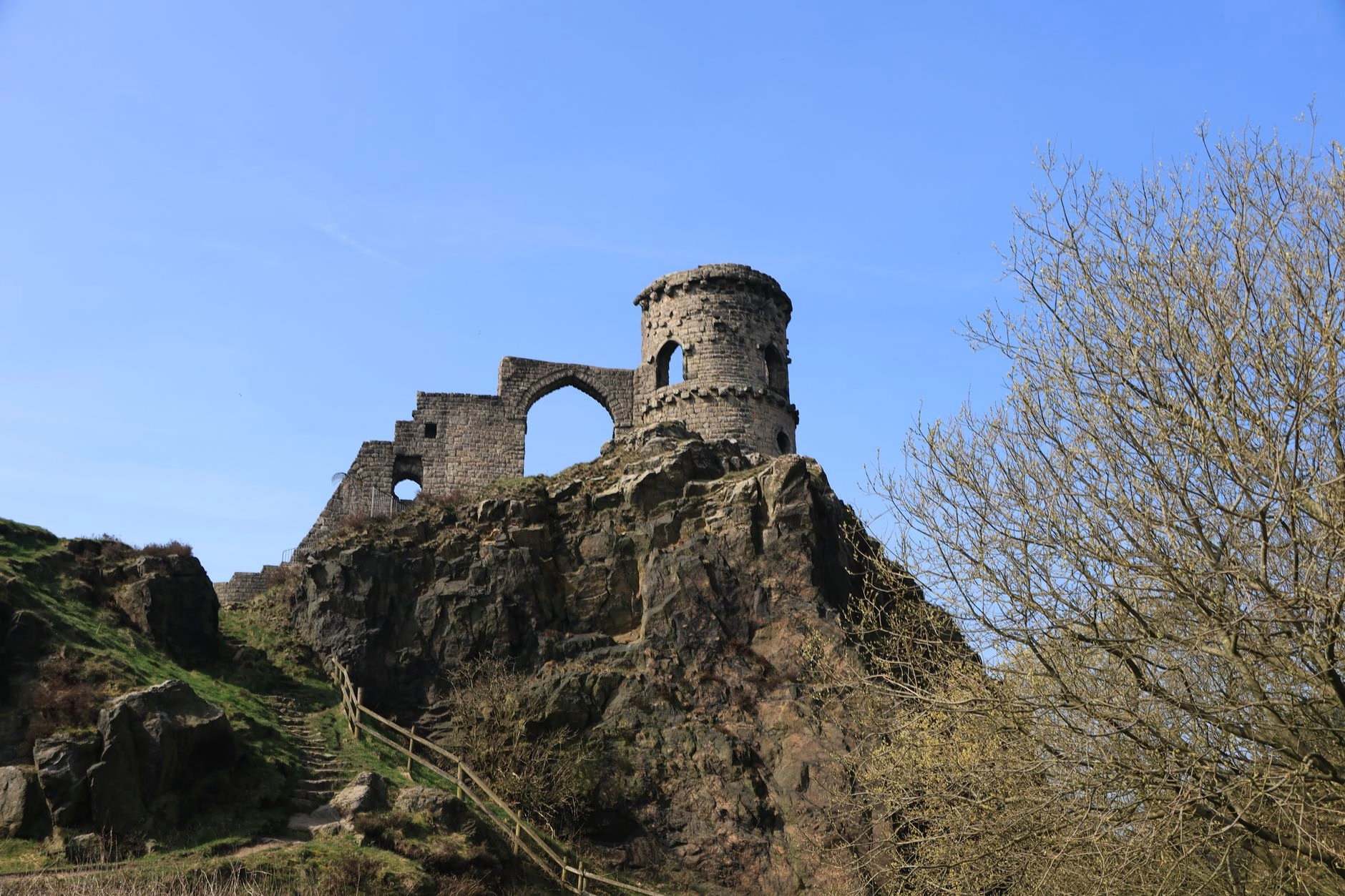
Featured image: Photo by Jan Wright on Pexels