Key Takeaways
- The mammalian dive reflex automatically slows the heart, narrows blood vessels in the limbs, and shifts blood toward the chest to protect the brain and heart during a breath-hold.
- Croatian free diver Budimir Šobat set the static apnea world record by holding his breath underwater for over 24 minutes in 2021, after pre-breathing pure oxygen.
- Everyday people share the same dive reflex as elite free divers, but years of specific training and natural lung capacity separate casual breath-holders from record setters.
- Cold water intensifies the dive reflex, which is why gasping and breath-holding both change sharply when your face hits cold water.
- Carbon dioxide buildup, not lack of oxygen, is usually what forces most people to breathe again long before oxygen actually runs low.
- Practicing extreme breath-holding alone, especially in water, carries a real risk of shallow water blackout and should never be done without trained supervision.
Try holding your breath right now. Twenty, maybe thirty seconds in, your chest starts screaming. Yet somewhere in the world, a free diver is floating face-down in a pool, perfectly calm, well past the ten-minute mark. So how do free divers hold their breath so long without their brains simply shutting off from lack of oxygen?
The short answer: their bodies trigger an ancient survival switch called the mammalian dive reflex. It slows the heart, redirects blood to protect vital organs, and lets trained athletes tolerate carbon dioxide levels that would send most people gasping for air. Elite free divers train for years to control and extend this reflex, but the basic wiring exists in every human body, including yours.
How Long Can the Human Body Really Survive Without Air?
Most untrained adults can hold their breath for 30 to 90 seconds before the urge to breathe becomes unbearable. The current static apnea world record, set by Croatian free diver Budimir Šobat in 2021, stands at over 24 minutes, achieved using pre-breathed pure oxygen and strict safety protocols.
That gap isn’t just willpower. Oxygen reserves in the lungs, blood, and muscles, plus how well the brain tolerates rising carbon dioxide, set the ceiling. Untrained bodies panic early because carbon dioxide buildup, not lack of oxygen, is what actually triggers that frantic need to breathe. Trained free divers learn to tolerate much higher carbon dioxide levels before their bodies force them to inhale.
What Is the Mammalian Dive Reflex, and Why Do Humans Still Have It?
The mammalian dive reflex is an automatic set of physical responses triggered when the face, especially around the nose and eyes, contacts cold water. It slows the heart rate, narrows blood vessels in the arms and legs, and conserves oxygen for the brain and heart.
Researchers believe this reflex is a leftover survival tool shared with diving mammals such as seals and whales, who rely on a much stronger version to hunt underwater for long stretches. Humans retain a weaker version of the same wiring. The reflex appears to be present from birth, which is part of why infant responses to water have long fascinated physiologists, though claims about babies instinctively “swimming” are often overstated and shouldn’t be tested at home.
The body has other automatic reflexes left over from our evolutionary past, similar to how goosebumps are a leftover response from ancestors who needed to trap heat with body hair.
Inside the Body During a Long Breath-Hold: Heart, Blood, and Spleen
During an extended breath-hold, the heart rate drops noticeably, a condition called bradycardia in humans, often falling well below a normal resting rate of 60-70 beats per minute. This slowdown reduces how much oxygen the heart itself consumes, leaving more available for the brain.
At the same time, peripheral vasoconstriction kicks in: blood vessels in the arms and legs tighten, cutting blood flow to the limbs and concentrating it around the chest and head. This is often called blood shift in free diving, and at depth it also helps the chest and lungs withstand water pressure that would otherwise be dangerous.
The spleen plays a supporting role too. It stores oxygen-rich red blood cells, and studies on breath-hold divers have shown the spleen can contract and release some of this reserve into circulation during a long hold. Researchers are still studying exactly how much this contributes, but it’s considered one piece of the body’s broader oxygen conservation reflex that helps extend a breath-hold.
Who Holds the Records, and How Were They Set?
Budimir Šobat holds the current static apnea world record, set in 2021, after holding his breath underwater for just over 24 minutes while floating motionless in a pool. Static apnea is the discipline where divers stay still underwater, as opposed to swimming distances or descending to depth.
Records like Šobat’s rely on breathing pure oxygen beforehand to maximize the body’s oxygen stores, a supervised medical-style setup that is very different from breath-holding on normal air. Competitive static apnea records done on regular air, without pure oxygen beforehand, typically sit in a much lower range, usually under 12 minutes, which shows how much the pre-breathing method changes the outcome.
| Record Type | Approx. Time | Method |
|---|---|---|
| Static apnea (pure oxygen record) | Over 24 minutes | Pre-breathing pure oxygen, held by Budimir Šobat |
| Static apnea (normal air) | Under 12 minutes | Breathing only normal air beforehand |
| Untrained adult | 30-90 seconds | No training or technique |
Can an Ordinary Person Train Their Body to Hold Breath Longer?
Yes, to a point. Many healthy people can noticeably extend their natural breath-hold time through practice, breathing technique, and lung training, though reaching anywhere near elite records requires years of supervised coaching with an organization experienced in free diving safety.
Training usually focuses on three things: carbon dioxide tolerance exercises that get the body used to higher CO2 levels, breathing and stretching drills aimed at using lung volume more efficiently, and relaxation techniques that lower heart rate and oxygen use. None of this replaces genetics entirely, since lung size and individual physiology vary from person to person. Still, the improvement most beginners see over weeks of safe, guided practice can be genuinely dramatic compared to their untrained starting point, a reminder that dedicated practice can reshape what a body is capable of, much like the discipline behind the climber who scaled mountains using only his hands.
Why Does Cold Water Make Such a Difference?
Cold water intensifies the mammalian dive reflex because cold receptors on the face signal the brain to slow the heart rate and constrict blood vessels more strongly than warm water does. This is why plunging your face into cold water can trigger a noticeably stronger reflex than a warm pool would.
Some free divers and breath-hold trainers use cold water face dips as part of warm-up routines to help prime this reflex before attempts. It’s also part of why sudden cold water immersion can briefly make breath-holding feel different the moment your face hits the water, even though overall cold exposure places extra stress on the body.
Is Breath-Hold Training Dangerous, and What Are the Real Risks?
Yes, breath-hold training carries real risks, and the most serious is shallow water blackout, where a person loses consciousness underwater from low oxygen with little or no warning. This is especially dangerous because, unlike running out of breath on land, a swimmer can lose consciousness silently and drown within minutes.
Other risks include lung strain from aggressive stretching routines and fainting from standing up too quickly after a long hold. Reputable free diving organizations, such as AIDA International, strongly recommend that any breath-hold practice in water happen with a trained buddy present, never alone, and never in a bathtub or home pool without supervision. If you have a heart condition, are pregnant, or have any other health concern, talk to a doctor before attempting breath-hold exercises.
What Science Says About the Limits of Human Breath-Holding
Researchers generally agree the mammalian dive reflex sets a biological ceiling, but exactly where that ceiling lies for any individual is still debated, since lung volume, spleen response, and psychological tolerance to discomfort all vary. What is well established is that oxygen alone isn’t usually the limiting factor; rising carbon dioxide and the resulting urge to breathe typically end an attempt before oxygen actually runs critically low.
This helps explain why pre-breathing pure oxygen, as used in official static apnea record attempts, extends times so dramatically compared to breathing normal air. The body’s capacity to adapt under extreme stress remains an active area of study, and it’s a reminder of just how much resilience the human body can show when pushed, in the same way an unusual medical case like a heart healing itself after a transplant leaves doctors looking for answers.
A Reflex Worth Marveling At
The mammalian dive reflex is one of the body’s quieter abilities, sitting dormant until cold water and a held breath wake it up. From Budimir Šobat’s record-setting 24 minutes to the thirty seconds most of us manage in the bathtub, the same basic biology is at work, just trained to very different degrees.
Share this with a friend who swears they can hold their breath forever, and drop a comment below with the weirdest human body fact you know.
Frequently Asked Questions
Can humans train to hold breath longer?
Yes. Most healthy people can noticeably extend their breath-hold time through carbon dioxide tolerance drills, breathing technique, and relaxation practice. Reaching elite, record-level times still requires years of supervised coaching, and any serious training should happen with an experienced buddy or organization, never alone in water.
What triggers the mammalian dive reflex?
The reflex is triggered mainly by cold water contacting the face, especially around the nose and eyes. It automatically slows the heart rate, narrows blood vessels in the limbs, and redirects blood toward the brain and heart to conserve oxygen during a breath-hold.
Is it carbon dioxide or lack of oxygen that makes you need to breathe?
For most people, it’s rising carbon dioxide, not falling oxygen, that creates the urge to breathe. Trained free divers practice tolerating higher carbon dioxide levels, which lets them stay underwater longer before their body forces them to surface and inhale.
What is shallow water blackout?
Shallow water blackout is sudden loss of consciousness underwater caused by low oxygen, often with little or no warning. It’s a serious risk during breath-hold practice and is why experts recommend never practicing extended breath-holds alone, even in a shallow pool.
Does the dive reflex work on land, or only in water?
The dive reflex is strongest when cold water touches the face, but a milder version can activate with simple breath-holding alone. Cold water exposure, such as splashing the face, noticeably intensifies the heart-slowing and blood vessel response compared to holding your breath on dry land.
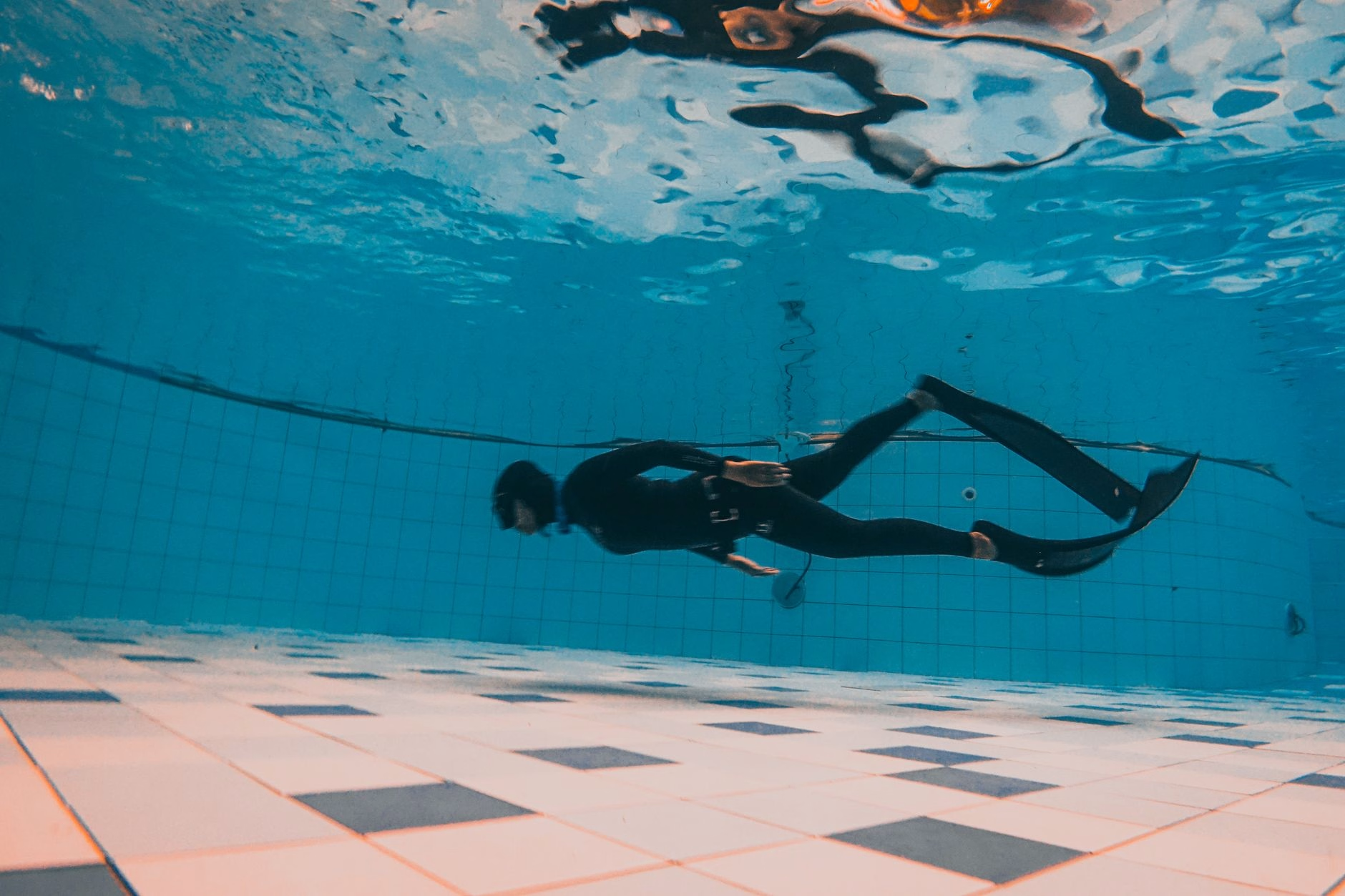
Featured image: Photo by Sonya Gabriela on Pexels