
22 Fake Nuclear Alerts in 7 Minutes: The Night Two Rival Nations’ Emergency Apps Turned on Their Own People
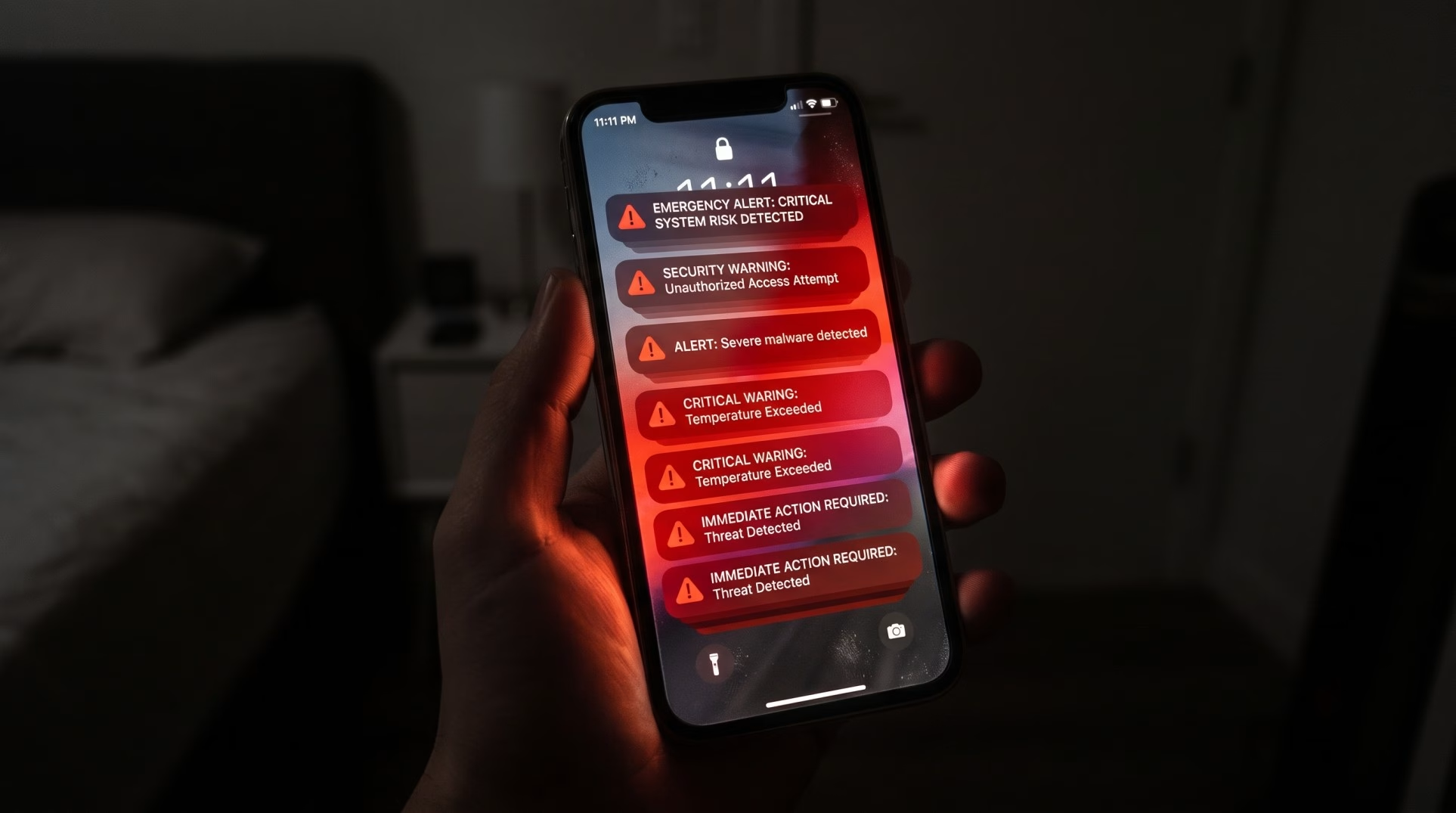
Imagine your phone buzzing late on a Sunday night. Then again. And again. The screen says there’s a radiation hazard in your city, a chemical attack alert, and street fighting in the capital.
For millions of people in Ukraine, that wasn’t a nightmare. It happened on November 1, 2026.
The strangest part came a few hours later, when the same thing happened in Russia.
The App a Nation Trusts With Its Life
To see why this matters, you need to know what the Air Alert app means in Ukraine.
The app launched in 2022, shortly after Russia’s full-scale invasion. It was built by Ajax Systems and Stfalcon with support from Ukraine’s Ministry of Digital Transformation. Its job is simple and vital: tell people when missiles or drones are coming, and when it’s safe again.
For millions of Ukrainians, it isn’t just another app on the home screen. It decides whether you run to the shelter or go back to sleep.
That’s why what happened next was so unsettling.
Seven Minutes of Chaos
Late on Sunday, November 1, the app started pushing alerts that had nothing to do with reality. According to cybersecurity reporting, 122 fake alerts went out in about seven minutes, roughly one every three or four seconds.
The messages warned of:
- ☢️ A radiation hazard in Kyiv
- ⚠️ A chemical attack alert
- 🚀 An incoming Oreshnik missile, Russia’s hypersonic ballistic missile
- 🔫 Street fighting in the capital
The public alert map even showed Kyiv and other regions under a nuclear alert.
Some messages were written in Russian, and one took an almost mocking tone. Translated, it said a nuclear alert was about to sound across Ukraine, then added: “Don’t worry, the Oreshnik is on its way.”
This wasn’t just a hack. It looked like psychological warfare delivered straight to people’s pockets.
“There Is No Radiation Threat”
Ukraine’s Air Force responded fast. On its official Telegram channel, it warned that the app had likely been compromised by the enemy, told people there was no radiation threat, and urged them to stay calm and follow official updates.
The app team temporarily turned off push notifications, cleaned up the false alerts, and later restored the service.
The real damage, though, wasn’t on the screen. It was the doubt it left behind.
Then Russia’s Phones Started Screaming
If the story ended there, it would be another chapter in a long cyberwar. But about three hours later, in the early hours of November 2, Russia announced that the mobile app of its Ministry of Emergency Situations had been hit by a large cyberattack.
Russian users received their own fake warnings of nuclear strikes, reaching millions of phones.
So within one night, two countries at war each watched their own emergency system tell citizens that nuclear danger had arrived, and in both cases it was false.
Were the two attacks connected? Was the second one revenge? Nobody has confirmed that. Officials in both countries acknowledged the breaches, but neither side’s claims have been independently verified, and no group has been publicly proven responsible.
Why This Is More Dangerous Than It Sounds
At first this sounds like a prank. Nobody was hurt and the alerts were fake. Security experts see it differently.
1. It damages trust in real warnings.
Emergency alerts only work if people believe them. Each false alarm makes it more likely that someone hesitates when a real one arrives, and in a war, a few seconds of hesitation can cost lives.
2. It turns the system against the people it protects.
Hackers didn’t need to fire a missile. They used a tool built to save lives to spread fear.
3. Any country could be next.
Almost every country now sends emergency alerts to phones: earthquakes, tsunamis, floods, missile threats. If a wartime app protected by a national government can be hijacked, every alert system has a reason to worry.
The Bigger Picture: A Very Strange Month for Hacking
This wasn’t the only bizarre cyberattack in early November. Around the same time, hackers remotely set supermarket freezers across Europe to temperatures as high as 50°C (122°F), spoiling food in more than 100 stores.
The message is hard to miss: hackers aren’t only going after passwords and bank accounts anymore. They’re targeting the everyday systems we never think about, until they stop working.
The Bottom Line
On November 1, 2026, a phone app meant to protect people became a source of fear for one night. A few hours later, the same thing happened to the other side.
It’s a reminder of how the modern world works: the most powerful weapon isn’t always a missile. Sometimes it’s a notification.
Sources: The Record by Recorded Future News, Cybernews, Kyiv Post, BankInfoSecurity