Key Takeaways
- Famadihana is a Malagasy ceremony where families exhume ancestors’ remains roughly every five to seven years, rewrap them in fresh silk shrouds, and dance with them before reburial.
- The ritual stems from traditional Malagasy beliefs that ancestors, called razana, remain active spiritual presences who can bless or influence the lives of their living descendants.
- Public health officials in Madagascar have linked some tomb openings to pneumonic plague exposure and have at times advised against disturbing tombs known to be infected.
- French colonial administrators and Christian missionaries discouraged Famadihana for over a century, yet it survived, often blended with Christian practice.
- Famadihana is still practiced today, mainly in Madagascar’s central highlands, though rising costs and urban migration are making it less frequent among younger generations.
Picture a festive crowd, a brass band, rice beer passing hand to hand, and a grandmother’s remains getting a fresh silk wrap and a dance around the family tomb. That’s not a horror movie scene. It’s a real, joyful event that still happens in Madagascar, and it has a name: Famadihana, or the “turning of the bones.”
Famadihana turning of the bones is a Malagasy funerary tradition in which families periodically open their ancestral tombs, remove the wrapped remains of relatives, rewrap them in new shrouds, and carry or dance with them before placing them back inside. It’s rooted in the belief that ancestors remain active, caring presences in the lives of the living, and that showing them respect through this ritual keeps the family connected and well.
What Exactly Is Famadihana, Madagascar’s ‘Turning of the Bones’?
Famadihana is a reburial ceremony practiced mainly by the Merina and Betsileo peoples of Madagascar’s central highlands, built around the belief that honoring the dead strengthens the family and secures the ancestors’ goodwill. The Malagasy word describes the physical act of unwrapping and rewrapping remains, which is why English sources translate it as “the turning of the bones.”
Families treat it less like a funeral and more like a reunion. Relatives travel from across Madagascar and sometimes from overseas to attend, since a single Famadihana can involve many people connected to one family tomb. It generally happens during the dry winter months, when roads are passable and the event can be planned around the harvest and family schedules.
Where Did This Ritual Come From? Malagasy Beliefs About Death and Ancestors
Famadihana grew out of a traditional Malagasy cosmology in which death is not an ending but a slow transition, and ancestors, called razana, become spiritual intermediaries who can bless or trouble the living. The ritual reflects a belief that a person’s soul stays connected to their body until the flesh has fully decomposed, which is part of why remains are periodically tended to before eventually being left undisturbed.
In this worldview, the razana are not distant memories. Families consult them before major decisions and thank them for good fortune. Honoring them with fresh shrouds and a celebratory dance is a way of keeping the relationship alive, closer to checking in on a respected elder than mourning a loss. This reflects a broader pattern, seen in many traditional societies, where the line between the living and the dead was treated as far more permeable than it typically is in modern Western culture, a theme also explored in accounts of ancestors eating human flesh as part of ritual practice elsewhere in the world.
What Actually Happens During a Famadihana Ceremony?
A Famadihana ceremony follows a fairly consistent sequence: the family opens the tomb, lifts out the wrapped bodies, rewraps each one in a new silk shroud called a lamba, and parades or dances with the remains to live music before returning them to the tomb. The event usually lasts a full day and is treated as a celebration rather than a somber occasion.
A typical ceremony includes these steps:
- Preparation: The family chooses a date, often guided by an elder or local custom and tied to the dry season.
- Opening the tomb: Male relatives usually handle the physical work of unsealing the family crypt.
- Unwrapping and identification: Each body is carefully lifted out and identified by elders who remember the person.
- Rewrapping: The remains are wrapped in a fresh lamba, often a handwoven silk cloth bought specifically for the occasion.
- The dance: Family members carry the wrapped bodies and dance with them to brass band music, sometimes for hours.
- Feasting: Food and drink are shared among guests, turning the day into a genuine community celebration.
- Reburial: The remains go back into the tomb, sometimes with personal items placed alongside them.
Why Do They Dance With the Remains Instead of Just Reburying Them?
Families dance with the remains because the movement itself is considered an act of love and respect, a physical way of including the ancestor in the joy of the living rather than treating them as something to fear. The dancing also reaffirms family unity, since everyone present takes a turn helping to carry and celebrate their relative.
It helps to correct a common misconception here: Famadihana is not meant to be creepy or disrespectful toward the dead. From the Malagasy perspective, treating remains with fear or disgust would be the actual insult. The dancing, music, and bright shrouds express gratitude, and families often describe the day as one of the happiest on their calendar, closer in spirit to a wedding than a wake.
Is It True Famadihana Has Been Linked to Plague Outbreaks?
Yes, Madagascar’s health authorities have linked some tomb-opening practices to the spread of pneumonic plague, since disturbing contaminated remains or soil can expose people to the bacteria that causes it. Madagascar reports plague cases most years, concentrated in certain highland regions, and officials have at times advised families to avoid exhuming bodies from tombs known to be in affected areas.
This doesn’t mean every ceremony is dangerous. The risk is tied to specific tombs in regions with a history of plague, not to the ritual as a whole. Public health messaging in Madagascar has generally focused on education and targeted advisories rather than outright bans, since Famadihana remains deeply significant to the communities who practice it. Anyone with specific health questions about exposure to human remains should speak with a medical professional rather than rely on general guidance.
How Did Colonialism and Christianity Try to Stop This Tradition?
French colonial administrators and Christian missionaries discouraged Famadihana from the 19th century onward, viewing it as incompatible with Christian teachings about death and the afterlife. France established colonial rule over Madagascar in 1896, and missionary activity had already been growing for decades before that, pushing many Malagasy families toward Catholic or Protestant burial customs.
Despite this pressure, Famadihana never disappeared. Many Malagasy families found ways to blend Christian faith with ancestral practice, attending church services while still holding a Famadihana for their relatives. This kind of cultural blending, where an imposed religious system gets folded into older traditions rather than replacing them outright, shows up repeatedly across history, including in debates over ritual practices among early Europeans discussed in our piece on early European ritual practices that also clashed with later religious norms.
Is Famadihana Still Practiced in Madagascar Today?
Famadihana is still practiced today, mainly among Merina and Betsileo communities in Madagascar’s central highlands around cities like Antananarivo, though it’s becoming less common as families urbanize and costs rise. A ceremony traditionally happens every five to seven years for a given tomb, though the exact timing often depends on finances and family consensus rather than a strict calendar.
The biggest threat to the tradition isn’t government policy but economics. New silk lambas, feasting for dozens of guests, and travel costs for extended family add up quickly, and younger Malagasy people moving to cities for work don’t always have the time or money to return for every ceremony. Some families now combine Famadihana for multiple relatives in one event to reduce the expense, a practical adaptation that keeps the custom alive in a leaner form.
How Does Famadihana Compare to Other Cultures’ Death Rituals Around the World?
Famadihana stands out globally for its direct, hands-on interaction with the dead, but it’s far from the only tradition built around exposing or physically engaging with human remains rather than sealing them away permanently. Zoroastrian communities have historically practiced excarnation through the Tower of Silence, deliberately exposing bodies to the elements rather than burying or cremating them, a practice covered in detail in our piece on the Tower of Silence ritual.
| Tradition | Region | What Happens to the Body | Core Belief |
|---|---|---|---|
| Famadihana | Madagascar | Exhumed, rewrapped, danced with roughly every 5-7 years | Soul stays connected until decomposition; ancestors stay active |
| Tower of Silence | South Asia, historically Iran | Exposed to open air and scavenger birds | Corpses are impure; earth, fire, water must stay unpolluted |
| Conventional Burial | Global | Buried once, left undisturbed afterward | Respect means permanence and minimal disturbance |
Seen side by side, these customs reveal different answers to the same universal question: what do the living owe the dead? Malagasy families answer with celebration and touch, Zoroastrian tradition answers with separation and purity, and conventional Western burial answers with permanence and quiet. None of these approaches is more “normal” than another; they’re different solutions shaped by distinct beliefs about the soul and the body.
A Tradition Worth Understanding
Famadihana isn’t shock content, even though a short clip can make it look that way out of context. It’s a considered way of keeping family bonds alive across generations, built on a belief system that treats ancestors as present and worth honoring every few years. Whether the tradition continues depends less on outside opinions and more on Madagascar’s own economic and cultural shifts.
If this gave you a new way to think about how different cultures handle death, share it with a friend who’d appreciate it, and drop a comment with the weirdest death-related fact you know.
Frequently Asked Questions
What does Famadihana mean in Malagasy?
Famadihana is commonly translated as “the turning of the bones,” describing the act of unwrapping ancestors’ remains, rewrapping them in fresh silk shrouds, and reburying them. The name reflects the ceremony’s central physical act rather than a literal word-for-word translation.
How often does a family hold a Famadihana ceremony?
Most families hold Famadihana every five to seven years for a given tomb, though the exact timing depends on finances, family consensus, and sometimes guidance from an elder or astrologer. There’s no strict universal schedule across Madagascar.
Is Famadihana dangerous or linked to disease?
Health authorities in Madagascar have linked some tomb openings to pneumonic plague exposure in specific regions with a history of outbreaks, prompting targeted advisories rather than a nationwide ban. The ritual itself isn’t inherently dangerous; the risk relates to particular infected tombs.
Do all Malagasy people practice Famadihana?
No, Famadihana is practiced mainly by the Merina and Betsileo peoples of Madagascar’s central highlands, not by every ethnic group or region on the island. Many coastal and other communities follow different burial customs entirely.
Why do families dance with the remains during Famadihana?
Families dance with the remains as an expression of love and respect, treating the ancestor as part of the celebration rather than something to fear. The dancing also reinforces family unity, since relatives take turns carrying and celebrating together.
Is Famadihana disappearing in Madagascar?
Famadihana is becoming less frequent, mainly due to rising costs for silk shrouds and feasting, plus younger generations moving to cities for work. It hasn’t disappeared, but families increasingly combine ceremonies or space them out further to manage expenses.
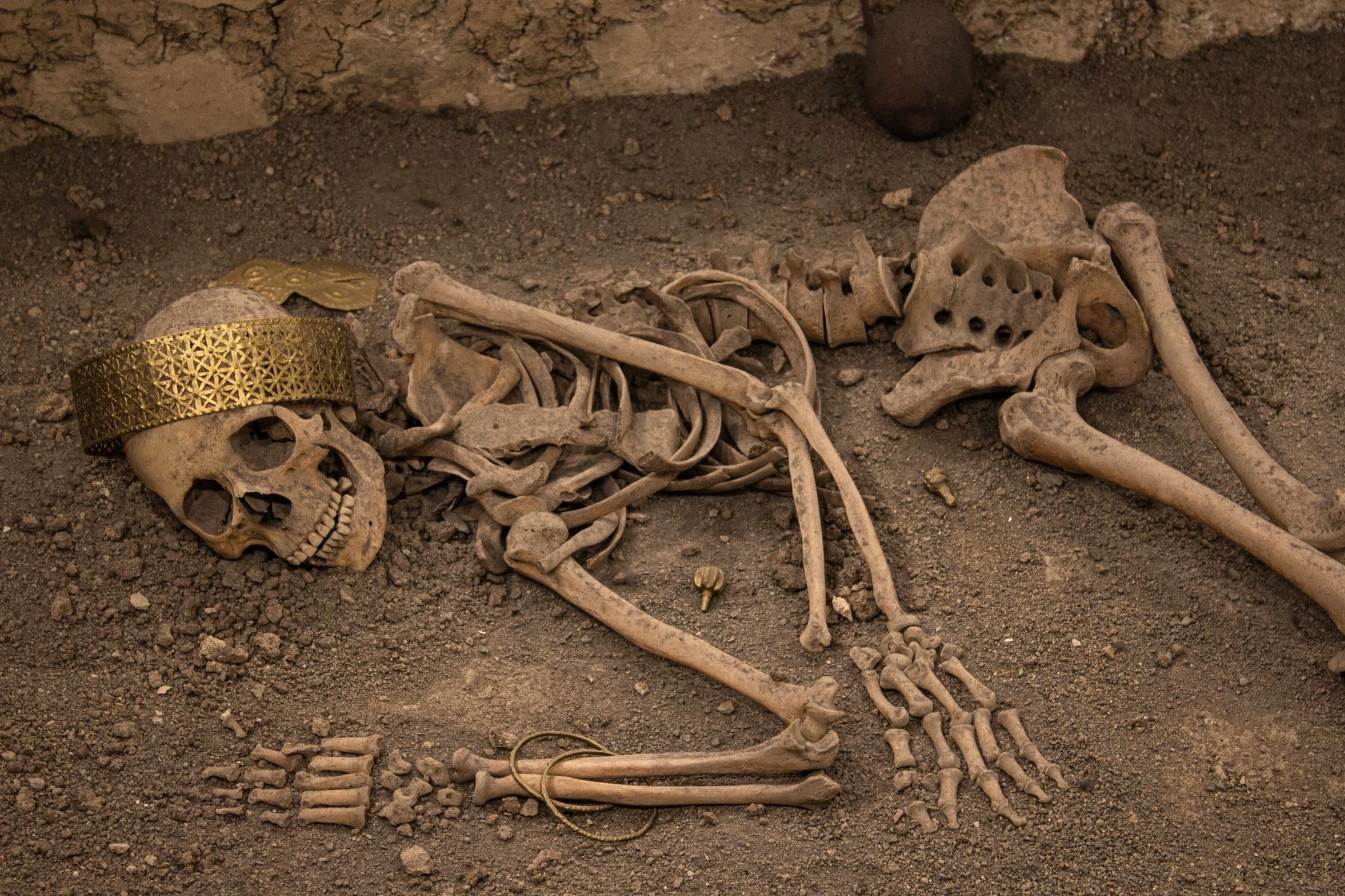
Featured image: Photo by Yunus Emre Ilıca on Pexels