Key Takeaways
- The Monkey Buffet Festival takes place every late November in Lopburi, Thailand, where locals set out large amounts of fruit and food for the city’s wild macaques.
- The tradition is rooted in reverence for Hanuman, the Hindu monkey god, and Lopburi’s history as home to ancient Khmer temple ruins like Prang Sam Yot.
- Lopburi’s monkey population grew over generations thanks to shelter at temple ruins and steady feeding, with local estimates now reaching into the thousands.
- The festival boosts tourism and reflects genuine cultural respect, but it doesn’t solve real issues like property damage and overpopulation that residents face year-round.
- Thai wildlife authorities have used sterilization and relocation programs to try to manage Lopburi’s monkey population more sustainably.
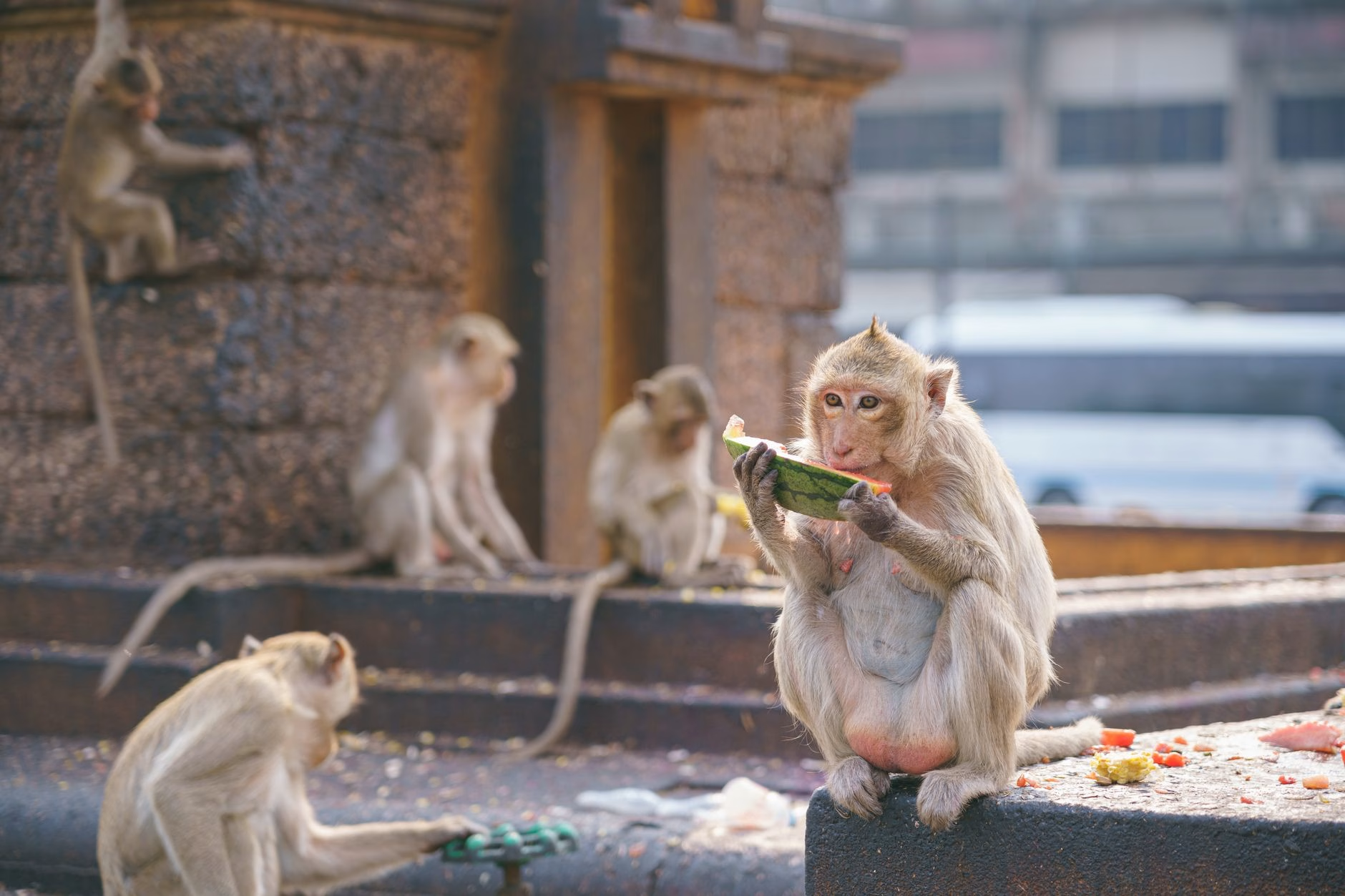
Picture a town square stacked with pyramids of watermelon, sticky rice, and tropical fruit — all of it arranged for guests who will eat with their hands, steal from each other’s plates, and never once say thank you. That’s the Monkey Buffet Festival in Lopburi, Thailand, where wild long-tailed macaques descend on a banquet built just for them. It sounds like a joke, but it’s a real annual event rooted in religion, history, and a genuine wildlife management challenge.
The Monkey Buffet Festival Thailand is held every year in Lopburi, a city roughly 150 kilometers north of Bangkok, where locals set out a large spread of fruit and vegetables for the city’s wild monkey population as a gesture of goodwill, folklore, and civic pride rolled into one strange, photogenic tradition.
What Is the Monkey Buffet Festival, Exactly?
The Monkey Buffet Festival is an annual event in Lopburi where residents and businesses lay out fruit, vegetables, and snacks for the city’s resident troops of long-tailed macaques (Macaca fascicularis). Tables go up near the ancient Khmer temple ruins in the city center, decorated like a banquet, then thrown open for the monkeys to raid.
It typically takes place in late November, after the rainy season, when Lopburi’s hotels and businesses near the historic district host the spread as both a cultural offering and a tourism draw. Crowds of visitors and photographers gather to watch the macaques climb over tables, grab fruit, and generally act like, well, monkeys at a free buffet.
Why Does Lopburi Throw an Annual Feast for Monkeys?
Lopburi feeds its monkeys out of a mix of religious respect, local folklore, and genuine affection for animals that residents see as part of the city’s identity. Many locals view the monkeys as linked to the city’s sacred history, so feeding them is treated as a gesture of goodwill rather than a chore.
The tradition also has a practical side. Business owners have learned that monkeys are good for tourism: visitors travel specifically to see Lopburi’s famous macaques, and the festival turns an everyday presence into a marketable event. It does not eliminate day-to-day friction between monkeys and residents, but it channels some of that relationship into a celebration rather than a complaint.
What’s the Hanuman Connection to Thailand’s Monkey City?
Lopburi’s monkey reverence traces back to Hanuman, the monkey god from the Hindu epic the Ramayana, known for his loyalty, strength, and devotion. Thailand’s own version of the epic, the Ramakien, casts Hanuman as a heroic ally, and local tradition links Lopburi’s ancient temples to this wider Hindu-Buddhist heritage.
This mythological link is why Lopburi has earned the nickname “Monkey City” and why the macaques living among its temple ruins are treated with a kind of tolerance rather than simply chased off. Hanuman’s popularity across Thai, Cambodian, and broader Southeast Asian culture means the monkey isn’t just an animal here — it appears in religious art, temple carvings, and local identity. For another example of how myth and ritual shape daily life around the world, the ancestral reburial customs described in this look at the Famadihana turning of the bones show a similarly deep intertwining of belief and community practice.
How Did Lopburi End Up With So Many Wild Monkeys?
Lopburi’s monkey population grew around its historic Khmer temple complexes, particularly Prang Sam Yot, a 13th-century Hindu shrine later adapted for Buddhist use, which offered the animals shelter, shade, and proximity to people willing to feed them. Over generations, an urban macaque population took hold in the city center itself.
With few natural predators and a steady, informal supply of food from residents, tourists, and shop owners, the monkey population expanded over time. Exact figures are hard to verify, but local officials and Thai media have described a population in the thousands concentrated around the old town. Limited sterilization efforts for much of the city’s modern history allowed the troops to keep growing with little check.
What Really Happens on Festival Day?
On festival day, organizers set long tables near the Prang Sam Yot ruins and cover them with watermelons, pineapples, bananas, cucumbers, and sticky rice for the monkeys. The tables are arranged almost like a formal event, which makes the ensuing chaos even more entertaining to watch.
Once the food is set out, monkeys swarm the tables while photographers and tourists crowd around with cameras. A few things to expect if you attend:
- Monkeys grabbing food by the armful and retreating to rooftops or ledges to eat it.
- Scuffles breaking out between troops over prime food piles.
- Vendors and performers adding festival energy with music and traditional dress nearby.
- Visitors being warned to keep sunglasses, bags, and jewelry tucked away, since the monkeys are quick and curious.
It’s less a tidy ceremony and more a lively, slightly unruly spectacle — which is exactly why it draws visitors from outside Thailand every year.
Is This Tradition Actually Good for the Monkeys or the Town?
The honest answer is mixed: the festival benefits Lopburi’s tourism economy and reflects genuine cultural respect for the monkeys, but it does little to fix the deeper problems of overpopulation, property damage, and human-monkey conflict that residents face the rest of the year. Local shop owners have described monkeys entering stores, taking goods, and damaging property as the population has grown denser in the old town.
Thai wildlife authorities, including the Department of National Parks, Wildlife and Plant Conservation, have run sterilization and relocation campaigns in past years to try to manage numbers more sustainably. The festival itself is largely symbolic and doesn’t address population control directly, but it sustains public goodwill toward the monkeys even as frustrations grow among residents who deal with them daily. It’s a useful reminder that a tradition can be charming for visitors while a more complicated reality plays out on the ground — not unlike other rituals around the world that carry both deep meaning and real logistical weight, as seen in this explainer on the Tower of Silence ritual.
Could Lopburi’s Monkey Population Keep Growing?
Yes, without consistent population management, Lopburi’s monkey numbers could keep climbing, intensifying conflicts over food, space, and property in the city’s crowded old town. Macaques reproduce quickly, and in an urban setting without predators, their numbers can outpace what the city’s green spaces and food sources can comfortably support.
Thai officials have periodically rounded up monkeys for sterilization surgeries and relocated some to sanctuaries or enclosed habitats outside the city center. These efforts have had some success but face ongoing funding and logistical challenges. Residents and conservation groups generally agree that a long-term solution requires sustained sterilization and habitat management, not just an annual banquet, however well-intentioned.
How Can You Visit the Monkey Buffet Festival Yourself?
You can visit by planning a trip to Lopburi in late November, when the festival typically takes place near the Prang Sam Yot temple ruins in the city’s historic center. Lopburi is reachable by train or bus from Bangkok, usually in a few hours, making it an easy day trip or overnight visit.
A few practical tips if you go:
- Keep loose items like sunglasses, phones, and food out of reach — macaques are fast and curious.
- Avoid direct eye contact with monkeys, which they can read as a threat.
- Dress modestly if visiting nearby temples, as is customary at Thai religious sites.
- Check exact festival dates ahead of time, since they can shift slightly year to year.
Comparing Lopburi’s Monkey Festival Essentials
| Detail | What to Know |
|---|---|
| Location | Lopburi city center, near Prang Sam Yot temple ruins |
| Typical Timing | Late November, annually |
| Who Attends | Local macaque troops plus Thai and international visitors |
| Food Served | Watermelon, pineapple, bananas, cucumbers, sticky rice |
| Cultural Root | Reverence linked to Hanuman and ancient Khmer temple history |
Lopburi’s Monkey Buffet Festival is a lot more than a viral photo opportunity. It’s a living mix of Hindu mythology, Khmer history, local pride, and a genuinely tricky wildlife management puzzle that the town navigates one watermelon pyramid at a time. If this strange and surprisingly meaningful tradition made you smile, share it with a friend who loves offbeat travel stories — and drop a comment with the weirdest real-life festival or animal fact you know.
Frequently Asked Questions
What is the Monkey Buffet Festival in Thailand?
It’s an annual event in Lopburi where residents set out a large spread of fruit, vegetables, and other food for the city’s wild long-tailed macaques near the historic Prang Sam Yot temple ruins, drawing tourists who come to watch the spectacle.
Why do people in Lopburi feed monkeys every year?
Locals feed the monkeys out of respect tied to Hanuman, the Hindu monkey god, pride in Lopburi’s identity as ‘Monkey City,’ and practical benefits like drawing tourists who support the local economy.
When is the Monkey Buffet Festival held?
The festival is typically held in late November each year in Lopburi’s historic city center, though exact dates can shift slightly, so it’s worth checking current-year schedules before planning a trip.
How many monkeys attend the festival in Lopburi?
Exact numbers are hard to verify, but local reports and Thai media have described Lopburi’s macaque population reaching into the thousands, with a large concentration gathering near the temple ruins during the festival.
Is the Monkey Buffet Festival connected to Hindu mythology?
Yes, the tradition traces back to reverence for Hanuman, the monkey god from the Hindu epic the Ramayana and its Thai counterpart the Ramakien, who is honored for his loyalty and strength in Thai and Southeast Asian culture.
Are Lopburi’s monkeys dangerous to residents?
They can be a nuisance and occasionally aggressive, with reports of monkeys entering shops, taking belongings, and damaging property, so residents and visitors are advised to keep food and valuables out of reach.
Featured image: Photo by Karin Chantanaprayura on Pexels