
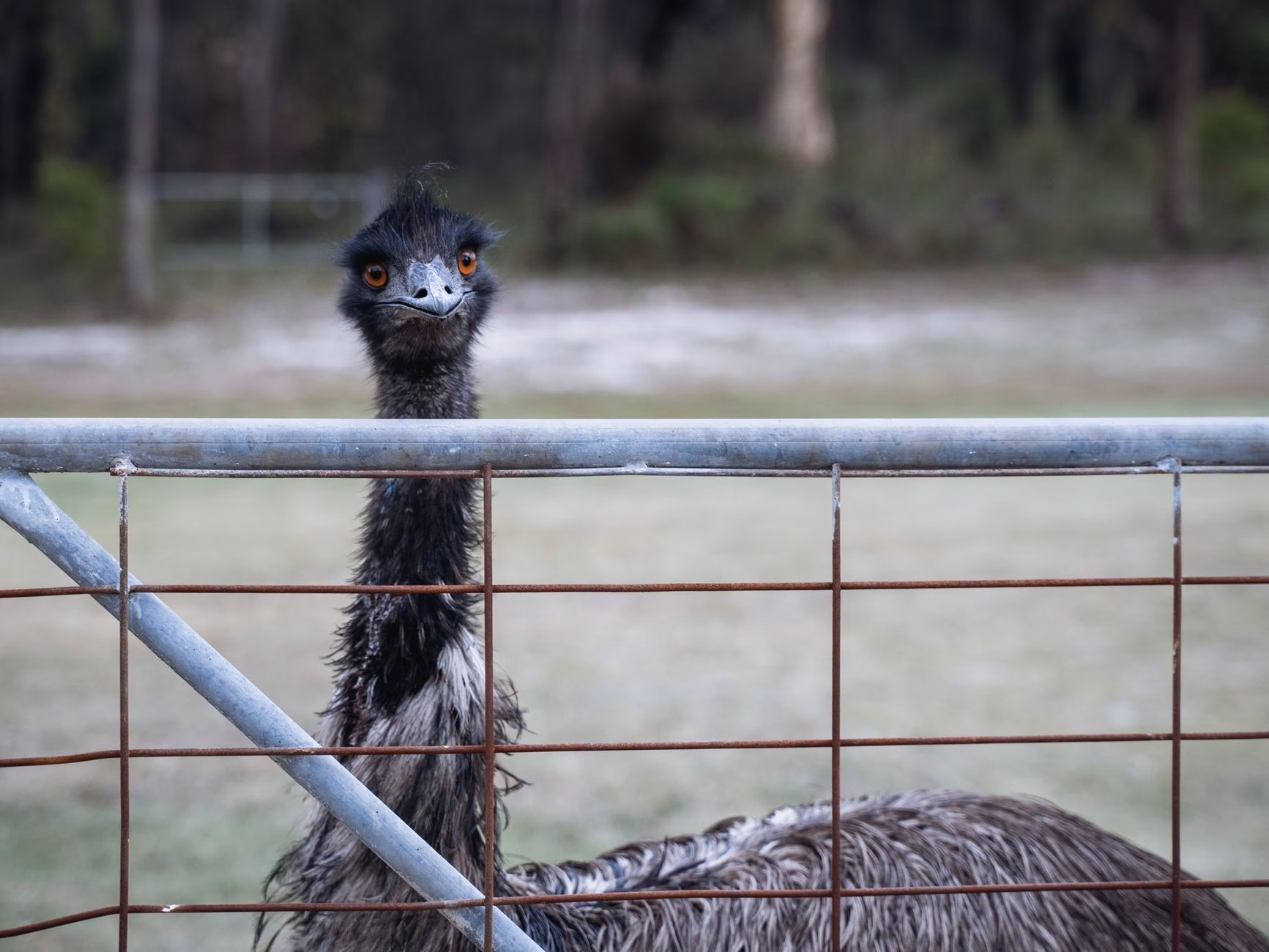
Key Takeaways
- The Great Emu War of 1932 was a genuine Australian military operation, not a myth, carried out in Western Australia against invading emu flocks.
- Soldiers armed with Lewis machine guns struggled to hit emus because the birds scattered into small, fast-moving groups instead of forming an easy target.
- The military operation was called off after a few weeks once it became clear that machine guns were not an efficient way to control emu numbers.
- Farmers eventually got more relief from improved fencing and bounty-based culling than from the original army deployment.
- The exact number of emus killed is disputed, with contemporary reports ranging from a few hundred to roughly a thousand birds.
Picture soldiers with machine guns lining up against birds that cannot even fly. It sounds like a joke, but the Great Emu War of 1932 really happened, and the birds genuinely came out ahead. This bizarre chapter of Australian history involves struggling wheat farmers, a frustrated army major, thousands of emus, and a lasting lesson about underestimating wildlife.
The Emu War was a real military operation carried out in Western Australia in late 1932, when soldiers armed with Lewis machine guns were sent to cull emus damaging farmland. The operation failed to meaningfully reduce emu numbers, and the military was withdrawn within weeks, making it one of the strangest episodes in Australian military history.
Was the Emu War Actually a Real Military Operation?
Yes, the Emu War was an actual deployment of the Australian military, approved by the government and carried out with official army equipment and personnel. It was not a folk tale or internet exaggeration, even though the premise sounds absurd today.
The operation took place near Campion, in the wheat-growing region of Western Australia, in November 1932. Soldiers from the Royal Australian Artillery were sent out with two Lewis guns and a supply of ammunition to help farmers deal with large emu flocks. The Australian War Memorial and Western Australian state archives both hold records referencing the campaign, confirming it as a sanctioned, if unusual, pest-control mission rather than a publicity stunt.
Why Did Farmers Want the Emus Gone?
Farmers wanted the emus gone because large migrating flocks were trampling fences and eating wheat crops across Western Australia in 1932, threatening already fragile incomes. Many of these farmers were former soldiers who had been settled on the land after World War I under government resettlement schemes.
The Great Depression had already pushed crop prices down, and emus moving in from inland breeding areas made things worse by knocking down fences meant to keep rabbits and other pests out. With their fences broken and crops damaged, farmers petitioned the government for help, arguing that the scale of the problem was beyond what they could manage on their own. Their request eventually reached Sir George Pearce, Australia’s Minister of Defence, who agreed to send soldiers and machine guns to assist.
Who Was Major Meredith and Why Did He Bring Machine Guns?
Major G.P.W. Meredith of the Royal Australian Artillery led the operation, bringing Lewis machine guns because officials assumed rapid-fire weapons would make quick work of slow-moving flocks in open paddocks. The plan looked simple on paper: gather the birds, open fire, and clear the fields.
In his later reports, Meredith described the emus as surprisingly tough and difficult to target. He noted that the birds could keep moving after being hit and that they scattered with a speed and unpredictability the soldiers had not planned for. Accounts from the time describe the operation as far messier than expected, with the birds behaving less like easy prey and more like an elusive, fast-moving obstacle.
What Happened When Soldiers Faced Off Against the Birds?
The first encounters went badly for the soldiers almost immediately, because emus scattered before machine gun crews could get a clean, sustained line of fire. Instead of bunching together in the open, the flocks broke into small, fast-moving groups the moment shooting started.
Soldiers tried mounting a Lewis gun on a truck to chase fleeing birds, but the vehicle struggled on the rough, uneven terrain at the speeds needed to keep up. Emus are capable of running at speed over short distances and can change direction quickly, which made them far harder to hit than anyone had anticipated. Reports from the period describe the birds’ evasive movement as almost tactical, scattering the moment gunfire started and regrouping once the danger passed.
Why Couldn’t the Australian Army Defeat Emus with Machine Guns?
The army struggled because emus are fast, resilient birds that instinctively split into smaller groups under pressure, which undercut the advantage of machine guns built for concentrated, stationary targets. Weapons designed to mow down massed infantry are not well suited to scattered, sprinting wildlife.
Several specific problems compounded the failure:
- Emus could absorb hits and keep moving instead of dropping immediately.
- Thick feathers and a sturdy build reduced the impact of some shots.
- Flocks split into small groups at the first sign of danger, forcing soldiers to chase isolated birds instead of firing at a single mass target.
- Rough terrain and limited mobility slowed vehicles and gun crews during key encounters.
Within days, it was clear that conventional military tactics built for human combatants did not translate well to hunting unpredictable wild animals across open farmland.
How Many Emus Were Actually Killed by the End?
Exact numbers are disputed, but most accounts agree that only a few hundred to roughly a thousand emus were confirmed killed, despite a large amount of ammunition being fired. That is a small fraction of the tens of thousands of birds reported to be moving through the affected districts at the time.
The gap between effort and results embarrassed military officials once figures were reported back, and newspapers of the era mocked the campaign as an expensive overreaction with little to show for it. This mismatch between the scale of the operation and its actual results is a major reason the Emu War is still remembered today, rather than fading into a footnote like other routine pest-control efforts.
Did the Government Admit Defeat, and What Happened Next?
The government effectively acknowledged the operation was not working by withdrawing the soldiers after several weeks and shifting from military intervention to civilian-led solutions like bounty payments and improved fencing. Farmers were offered payment for emu culling instead of relying on army units.
This shift proved more practical over time. Local farmers and marksmen, with better knowledge of the terrain and emu behavior, combined with stronger barrier fencing, helped reduce crop damage in the following years. The episode nudged Western Australian authorities toward longer-term, locally managed approaches to problem wildlife instead of short, dramatic military solutions.
What Does the Emu War Teach Us About Wildlife and Warfare?
The Emu War shows that tools built for human conflict often fail against wild animals with very different instincts, speed, and resilience. It is a clear reminder that effective wildlife management usually depends on patience, local knowledge, and sustained effort rather than a single dramatic intervention.
Modern wildlife agencies in Australia generally rely on fencing, population monitoring, and carefully targeted culling programs rather than large-scale military deployments. The story endures as a popular example of how animals, even flightless ones, can outmaneuver well-armed humans, a theme that shows up in other strange corners of nature too. If you enjoy stories about birds defying expectations, you might like learning about the stinkiest bird on Earth, another feathered creature that surprises people for very different reasons.
History holds plenty of examples where authorities badly misjudged the people or situations they were dealing with, sometimes with consequences far more serious than a failed bird cull. For a darker example of policy built on flawed assumptions, see this account of brutal taxation systems in the 19th century.
The Great Emu War remains one of the most retold oddities in Australian history precisely because it is true, documented, and still a little hard to believe. Share this with a friend who loves strange history, and tell us in the comments the weirdest true fact you know.
Frequently Asked Questions
Did Australia really go to war with emus?
Yes, in 1932 the Australian military sent soldiers with machine guns to Western Australia to help farmers deal with large emu flocks damaging crops and fences. It was an official, government-approved operation, often nicknamed the Emu War, though it was formally a pest-control mission rather than a declared war.
Why did Australia fight emus instead of using regular pest control?
Farmers asked for military help because emu flocks were large, fast-moving, and damaging fences and wheat crops faster than local resources could handle. Officials believed machine guns would quickly solve a problem that civilian methods had struggled to control on their own.
Who led the military operation against the emus?
Major G.P.W. Meredith of the Royal Australian Artillery led the operation, directing soldiers equipped with Lewis machine guns. His later reports described the emus as unexpectedly difficult to kill in large numbers, despite the firepower available to his unit.
How many emus were killed during the Emu War?
Accounts vary, but most estimates put the confirmed emu deaths somewhere between a few hundred and around a thousand birds. That was a small fraction of the tens of thousands of emus reported in the affected farming districts at the time.
Why is it called a war if it was really pest control?
It is called the Emu War mostly because of how it was covered at the time and remembered afterward, not because it was an officially declared war. The nickname stuck due to the use of military personnel, machine guns, and the surprisingly poor results against wild birds.
What eventually solved Australia’s emu problem?
A combination of bounty payments for farmers who culled emus themselves and improved fencing proved more effective than the original military operation. Over time, these practical, locally managed methods helped reduce crop damage far more than machine guns had.
Featured image: Photo by Gilberto Olimpio on Pexels


