
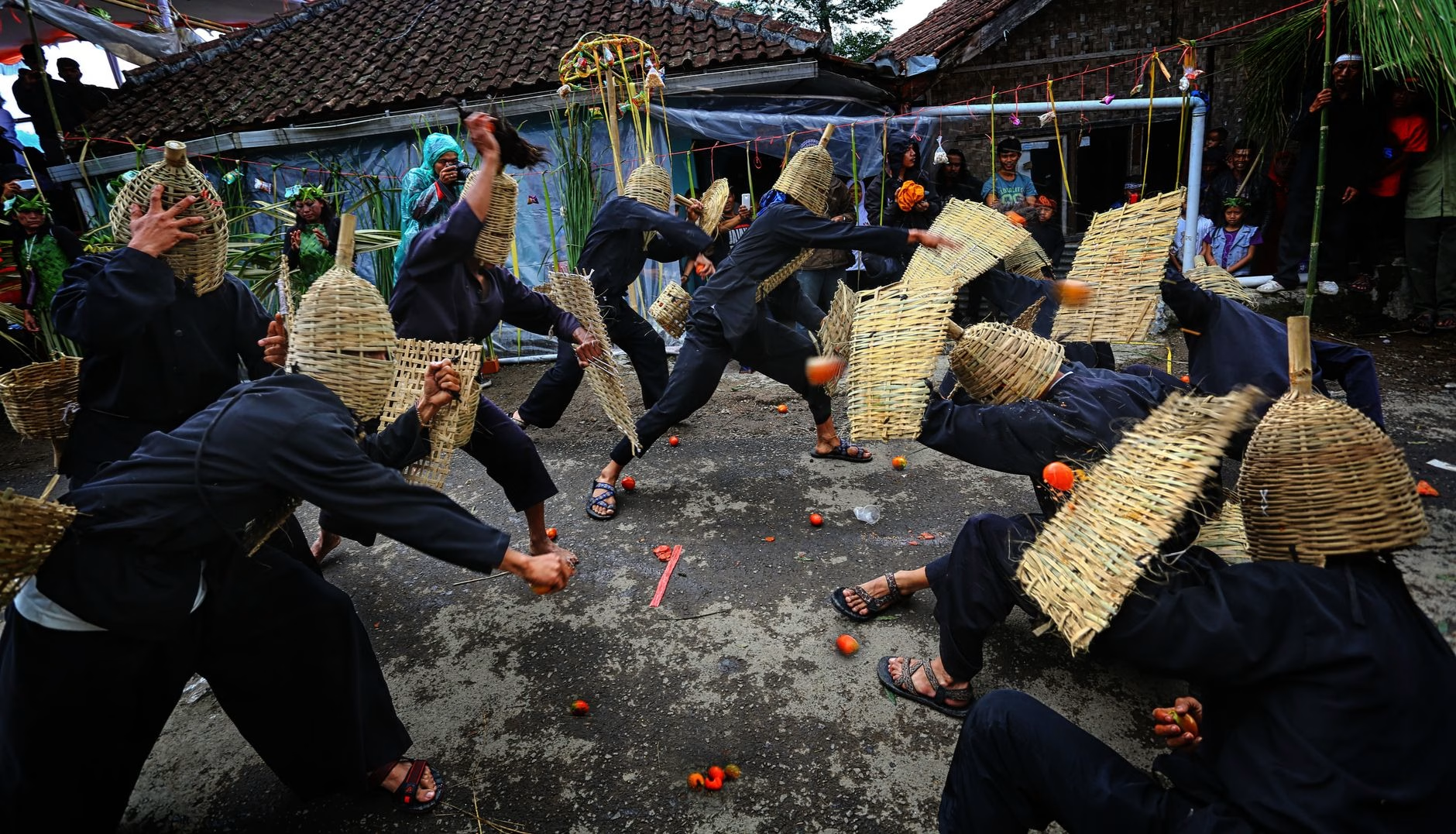
Key Takeaways
- La Tomatina festival happens every last Wednesday of August in Buñol, a small town near Valencia, Spain.
- Roughly 150,000 tomatoes, or about 120 tonnes, get thrown in a single hour-long battle.
- The exact origin is disputed, with competing stories involving a food fight, a prank, and possible protest during Francisco Franco’s dictatorship.
- Participants must squash tomatoes before throwing them to prevent injuries, and the tomatoes’ citric acid helps crews hose the streets clean afterward.
- Attendance requires a pre-purchased ticket, since Buñol’s town council capped the number of participants for safety reasons in 2013.
Picture a narrow Spanish street ankle-deep in red pulp, thousands of people laughing, and tomatoes flying so thick the air briefly turns crimson. That is an ordinary Wednesday at the end of August in a small town called Buñol, Spain. The La Tomatina festival is widely considered the world’s largest food fight, and it has run for close to eight decades.
So what is it, exactly? La Tomatina is an annual festival in Buñol, a town near Valencia, where participants spend one hour hurling overripe tomatoes at each other purely for fun. There is no prize, no religious meaning, and no deeper message beyond community joy and a very messy party. It draws tens of thousands of visitors from around the world who come just to get pelted with fruit.
What Exactly Is La Tomatina?
La Tomatina is a one-hour tomato-throwing festival held in Buñol, a town of roughly 9,000 residents located about 40 kilometers west of Valencia, Spain. Every year on the last Wednesday of August, trucks dump tonnes of overripe tomatoes into the town center, and a crowd that can swell past 20,000 people throws them at each other until a cannon blast signals the end.
The festival traditionally kicks off with a greased pole-climbing event called the “palo jabón,” where a ham is tied to the top. Once someone manages to knock the ham down, or once the scheduled start time arrives, trucks roll in loaded with tomatoes and the fight officially begins. It is chaotic and loud, yet carefully organized behind the scenes.
How Did This Tomato-Throwing Tradition Actually Begin?
Nobody knows the exact origin of La Tomatina with certainty, and that mystery is part of its charm. The most repeated story traces back to 1945, when a group of young people got into a street disturbance during a local parade near a vegetable stall and started throwing tomatoes at each other out of frustration.
Other versions suggest it began as a prank against a poor musical performer, a spontaneous food fight between friends, or even a loose form of protest during a period of restricted public gatherings under Francisco Franco’s dictatorship. Spanish authorities did ban the festival at points in the 1950s, which only seemed to make locals more determined to keep it going. By the 1970s, the tomato fight had become an accepted, celebrated town tradition rather than a public disturbance. Because no written record from 1945 confirms a single version, historians and locals alike treat the origin as disputed rather than settled fact.
This kind of layered, hard-to-pin-down origin story is common with strange cultural traditions. The turning of the bones ceremony in Madagascar has similarly complex explanations tied to ancestry and community bonding that shifted meaning over generations.
Why Do the Rules Say You Must Squash Tomatoes Before Throwing?
Participants are required to squash each tomato slightly before throwing it, which softens the impact and lowers the risk of injury. A whole, firm tomato thrown at close range can genuinely hurt someone, especially around the eyes or face.
Organizers also specify that the tomatoes used must be overripe and considered lower quality, essentially surplus produce that was not going to be sold at market anyway. This is not a festival that wastes prime tomatoes meant for the dinner table; it repurposes crop that would likely go to waste otherwise.
How Many Tomatoes Get Thrown in a Single Hour?
Around 150,000 tomatoes, weighing approximately 120 tonnes, get thrown during the one-hour event, according to figures regularly cited by Spanish tourism authorities. That works out to several truckloads of tomatoes dumped into the street before the starting cannon fires.
Here is a quick comparison of scale that puts the festival into perspective:
| Detail | Approximate Figure |
|---|---|
| Tomatoes thrown | 150,000 |
| Weight of tomatoes | 120 tonnes |
| Duration of the fight | 1 hour |
| Town population | About 9,000 residents |
| Typical visitor turnout | 20,000+ |
Those numbers mean the crowd of outsiders can outnumber the local population more than twofold on festival day, which is exactly why ticketing limits exist today.
What Happens to Buñol’s Streets After the Chaos?
Buñol’s fire department hoses down the streets with water immediately after the fight ends, and the job goes faster than you’d expect thanks to a bit of natural chemistry. Tomato juice is acidic, and that acidity helps loosen grime on the cobblestones as crews wash everything away.
Local volunteers and residents also pitch in with brooms and buckets. Within a few hours, the streets look largely normal again, though the smell of tomato can linger for a day or two. Nearby drainage systems are monitored to make sure the tomato runoff does not cause problems, since that much organic matter needs proper handling.
Is La Tomatina Safe, and What Are the Official Rules?
La Tomatina is considered safe when participants follow the official rules, which organizers enforce given the size of the crowd. The main rules include squashing tomatoes before throwing, stopping immediately when the second cannon blast sounds, and avoiding bottles or any hard objects in the fight zone.
Other important rules and tips:
- Wear clothes and shoes you are fully prepared to throw away afterward.
- Protective goggles are a smart idea, since tomato acid and pulp can sting the eyes.
- Do not tear other people’s shirts, which is explicitly discouraged out of respect and safety.
- Trucks have the right of way, so step aside when they drive through.
- Local shops and homes along the route cover their windows and facades with plastic sheeting beforehand.
Minor scrapes and slips on the slick pulp are the most common mishaps, so sturdy footwear genuinely helps. As always, anyone with health concerns, skin sensitivities, or mobility issues should check with a doctor before joining a physically intense event like this one.
Can Anyone Attend, and How Do You Get a Ticket?
Tourists can absolutely participate in La Tomatina, but attendance requires purchasing an official ticket in advance because organizers cap the number of participants for safety reasons. Buñol’s town council introduced ticketing in 2013 after unofficial attendance climbed into the tens of thousands and strained the town’s infrastructure.
Tickets typically go on sale online several months before the event and sell out quickly, so early planning matters. Many visitors book accommodation in Valencia, since Buñol itself has limited hotel space, and take a short train or bus ride to the festival on the day itself.
How Does La Tomatina Compare to Other Bizarre World Food Festivals?
La Tomatina sits alongside a small but fascinating category of festivals where food becomes the centerpiece of a spectacle rather than a quiet meal. In Thailand, the Monkey Buffet Festival in Lopburi sets out large spreads of fruit and vegetables for the local monkey population, turning food into an act of community generosity rather than combat.
These traditions share a common thread: public, communal rituals built around food that strengthen social bonds rather than break them apart. You can see a similar pattern explored in the Monkey Buffet Festival in Thailand, where offering food becomes its own cultural event.
Strange traditions do not always stay lighthearted, though. Some historical customs carried far heavier weight, like the breast and head taxes imposed in the 19th century, a reminder that not every unusual tradition in history was born from joy.
A Juicy Tradition Worth Sharing
La Tomatina proves that sometimes the strangest traditions are also the most joyful ones, turning surplus tomatoes and a disputed origin story into one of the world’s most famous festivals. Whether it began as a prank, a protest, or a simple street disturbance, Buñol has turned chaos into a beloved yearly celebration watched by people around the globe.
If this tomato-soaked story made you smile, share it with a friend who needs to hear about it, and drop a comment with the weirdest festival or tradition you have ever heard of.
Frequently Asked Questions
What is La Tomatina and why do they throw tomatoes?
La Tomatina is an annual festival in Buñol, Spain, where participants throw about 150,000 overripe tomatoes at each other for one hour purely for fun. It has no religious or political purpose today; it is a community celebration rooted in a disputed origin story from 1945.
Where and when does La Tomatina take place?
La Tomatina takes place in Buñol, a small town near Valencia, Spain, on the last Wednesday of August each year. The main event lasts just one hour, though related festivities and street parties happen throughout the surrounding days.
How did La Tomatina start?
The most common story says La Tomatina began in 1945 after a street disturbance near a vegetable stall turned into an impromptu tomato fight. Other theories point to a prank on a poor musician or quiet protest during Francisco Franco’s dictatorship, so the true origin remains disputed.
How many tomatoes are used in La Tomatina each year?
Approximately 150,000 tomatoes, weighing around 120 tonnes, are thrown during the single hour-long event. The tomatoes used are overripe and considered lower quality, essentially surplus produce that would likely go to waste otherwise.
Is La Tomatina free to attend or do you need a ticket?
You need a pre-purchased ticket to attend La Tomatina, since Buñol’s town council capped participant numbers in 2013 for safety and infrastructure reasons. Tickets sell out quickly, so booking several months ahead is strongly recommended.
Is La Tomatina dangerous or messy to clean up?
La Tomatina is generally safe when participants follow the rules, such as squashing tomatoes before throwing and stopping when the cannon sounds; minor slips are the most common issue. Cleanup is surprisingly quick, since the acid in tomato juice helps fire crews hose and clean the streets.
Featured image: Photo by kevin yung on Pexels