In a village street in northern Spain, a dozen or so babies lie in a row on thin mattresses, swaddled and mostly asleep, while a man in a yellow-and-red bodysuit and a snarling rubber mask runs at full speed toward them. He does not stop. He does not slow down. He jumps, clears every single infant, and keeps running. This happens every year, on purpose, with a priest standing nearby to bless the babies once the devil has passed over them.
The event is called El Colacho, or El Salto del Colacho — “the Leap of the Colacho” — and it takes place in Castrillo de Murcia, a small village in the municipality of Sasamón, in Burgos province, Spain. It is not a stunt invented for viral video clips, though it has certainly become one. It is a documented, centuries-old piece of Catholic folk ritual, and its backstory is stranger and better sourced than most of the shocked headlines about it ever let on.
A Street Full of Babies, a Man Dressed as the Devil
The baby-jumping is really the final scene of a week-long festival tied to Corpus Christi, the Catholic feast that falls roughly 60 days after Easter. El Colacho happens on the Sunday after that feast — a moving date, since Corpus Christi itself moves every year depending on Easter. If you want to actually catch it, the regional tourism authority of Castile and León or the Castrillo de Murcia brotherhood is the place to check for that year’s exact schedule, since the specific dates shift annually.
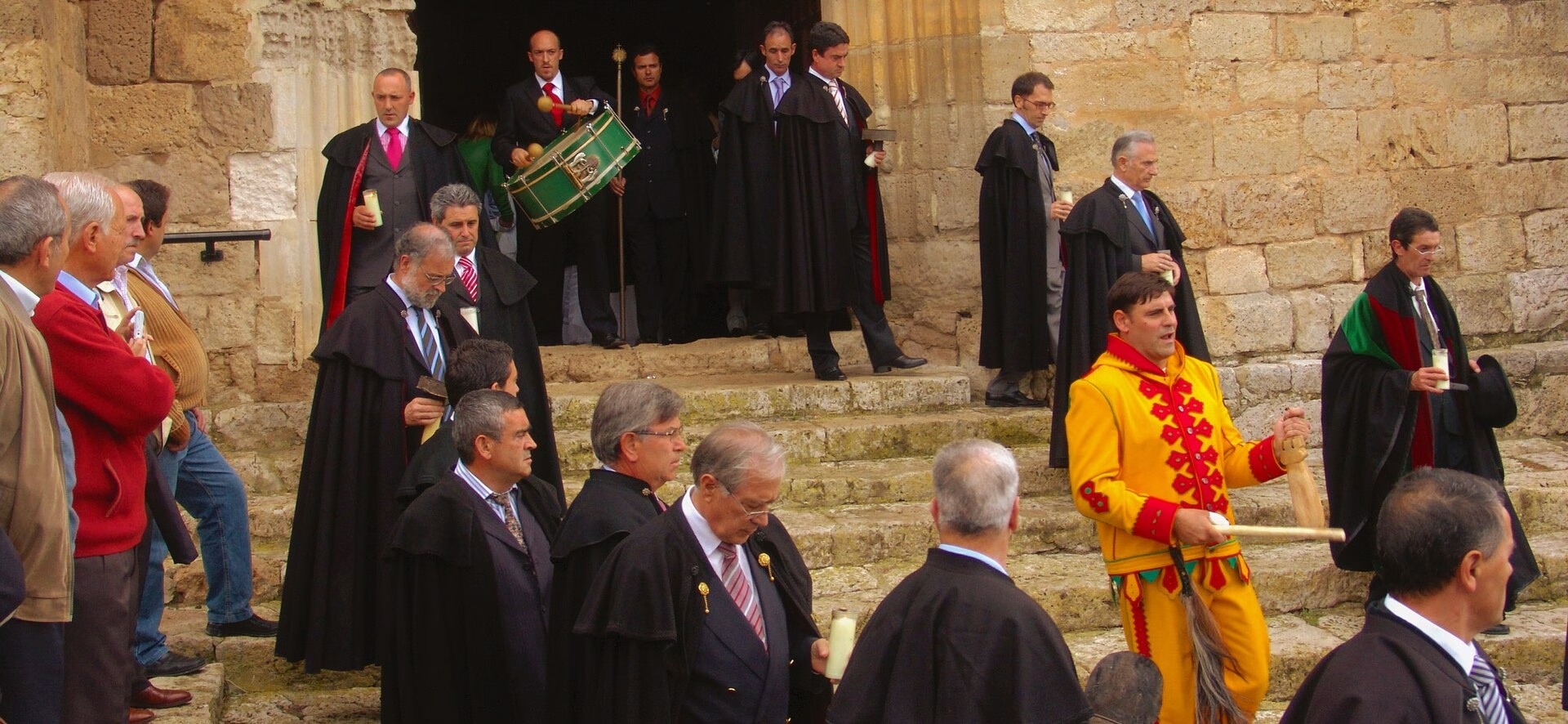
During the days leading up to the jump, men called Colachos run through the village streets dressed in bright, almost clownish red-and-yellow costumes topped with grotesque masks. They carry a horsehair whip and castanets, and they chase down onlookers who taunt them, swatting at anyone bold enough to heckle the devil. It plays out like a slow-building chase scene that has been rehearsed for four centuries, building toward one specific Sunday.
On that Sunday, any baby born in the village during the previous twelve months is brought out and laid on mattresses in the street. Then the Colacho runs the length of the row and jumps clean over all of them, like a hurdler who has swapped the hurdles for sleeping infants. A priest follows, blessing the children and sprinkling them with rose petals.
Four Hundred Years, Zero Injured Babies
The obvious question is whether this is reckless. The honest answer, based on the historical record, is that it has not produced the outcome you would expect. No reports of babies being injured during the baby-jumping portion of the festival’s recorded history have been documented. The only injuries on record belong to the grown men doing the jumping — a handful of pulled hamstrings over the years, which is a fairly ordinary sports injury for a man in a rubber mask sprinting down cobblestones and launching himself over a row of children.
One performer told Lonely Planet that he trains for it the way anyone training for a jump event would: he lays pillows out across his garage floor and practices clearing them, over and over, before the actual day arrives. It is, in its own way, the least surprising detail in the entire story — somewhere in Castrillo de Murcia, a man has spent years treating devil-jumping as a discipline that rewards practice, like free throws or pole vaulting.
Where the Tradition Actually Comes From
El Colacho is old enough that nailing down its exact start date is genuinely difficult. The earliest known documents referring to the festival date to 1621, according to National Geographic Spain, though other sources point to 1620. Nobody has resolved which is correct, and a claim that the Pope personally blessed the ritual that same year appears only on a single low-quality site and cannot be confirmed anywhere credible — so that detail does not make it into any serious account of the festival, including this one.
What is better documented is who runs it: the Catholic Brotherhood of the Santísimo Sacramento de Minerva, the Brotherhood of the Blessed Sacrament of Minerva, has organized the event for generations. The regional government has since recognized it as a “Festival of Tourist Interest of Castile and León,” an official cultural designation that has not stopped the ritual from being, at its core, exactly what it was in the 1600s.
Historians generally believe the tradition blends pre-Christian customs with later Catholic ritual, though — much like the exact founding date — the precise origins were never written down clearly enough to settle the debate.
The Theology Nobody Expects
Here is the part most quick coverage of El Colacho skips entirely: the symbolism is not about baptism, and the Church has gone out of its way to say so.
Local priest Fernando Arce laid out the actual meaning on camera for Newsflare: “El Colacho is the representation of evil, so evil wants to take over the children, it goes to catch them, but of course the Blessed Sacrament, which is Jesus, wants to protect the children and goes after them, so El Colacho runs away and jumps over all the children.”
In other words, the devil isn’t blessing the babies by jumping over them — he’s fleeing. The jump represents evil being chased off by the advancing Blessed Sacrament, not evil granting the children anything. Locally, though, a separate and more popular belief has grown up alongside that official explanation: many villagers hold that the jump itself cleanses the babies of original sin and wards off illness and evil spirits for the year ahead.
That folk belief is precisely what got the Vatican’s attention. Pope Benedict XVI asked Spanish priests to distance themselves from El Colacho, because Catholic doctrine holds that baptism — not a man in a devil mask jumping over an infant — is what cleanses original sin. The Catholic Church does not endorse El Colacho as official doctrine; it is worth being clear about what that disapproval does and does not mean. The Vatican never claimed the festival is dangerous or that it endorses devil worship. It objected on a precise theological point, and nothing more.
Is El Colacho Still Celebrated Today — and Can You See It?
Despite the Vatican’s objection, nothing about the ritual has actually stopped. The village has kept running it, often with local clergy still taking part in the surrounding Masses and processions. In 2024, that year’s Corpus Christi Mass and procession were led by Archbishop Mario Iceta, with a local resident named Juan Pablo Calvo taking on the Colacho role that year. A 2025 report described the familiar scene repeating itself: drums, traditional dances, a crowd packed into the street, and the Colacho clearing roughly twenty babies in a single run.
Tourists can and do attend. The festival draws visitors specifically because it is unlike almost anything else on the Catholic calendar — a devil-themed street chase that climaxes with actual infants on mattresses. Children’s rights advocates have raised safety questions in recent years, and some have floated symbolic alternatives to using real babies. The village has not adopted them, and as of 2025 the ritual continues exactly as it has for roughly four hundred years.
| Element | Detail |
|---|---|
| Location | Castrillo de Murcia, Burgos province, Spain |
| Earliest documentation | 1621 (some sources say 1620) |
| Organizer | Brotherhood of the Blessed Sacrament of Minerva |
| Recorded infant injuries | None |
| Recorded adult injuries | Occasional pulled hamstrings |
If El Colacho sounds like a one-of-a-kind spectacle, Spain’s calendar has company for it — the country also hosts the tomato-throwing chaos of La Tomatina, a very different but equally strange crowd ritual. And if devils leaping over infants doesn’t quite top your list of odd annual gatherings, there’s always Thailand’s Monkey Buffet Festival or Madagascar’s Famadihana, the turning of the bones.
A Four-Century Leap of Faith
Strip away the shock-value headlines and El Colacho turns out to be something rarer: a ritual with an actual paper trail, a named organizing body, an on-record theological explanation, and a four-hundred-year safety record for the one group of participants everyone worries about. The men in the masks take the risk. The babies, somehow, never have.
Send this one to the friend who still doesn’t believe grown men in devil costumes jump over real babies in Spain every summer — then watch them look it up to prove you wrong, and come back agreeing with you.
Featured image: Image: Jtspotau, via Wikimedia Commons (CC BY 3.0)